
Structural Engineer in Draper, Utah
Draper has one of the wider ranges of structural conditions in the engineer’s files. The city includes older homes from the 1950s, 1990s subdivisions, newer construction, and steep properties near the Point of the Mountain. The recurring issues are not all the same: some involve drainage and concrete deterioration, others involve hillside soils, retaining walls, decks, or older framing.
At a 1990s home near Martha Dunyon Circle, the engineer inspected a long horizontal crack in the exterior foundation. The cracking was located a few inches below the top of the concrete wall and appeared to be related to years of repeated wetting. The likely mechanism was corrosion of reinforcing steel inside the wall. As the rebar rusts, it expands and pushes outward on the surrounding concrete, causing cracking and spalling. The important repair was not structural piers; it was to stop the long-term water exposure and prevent the deterioration from getting worse.
At another 1990s home near Cypress Point, apparent settlement at a pergola turned out to be a support and moisture problem. Wood posts were effectively sitting at or below grade, where sprinkler water and drainage had caused deterioration. The engineer recommended exposing the footings, verifying adequate size and depth, bringing the concrete supports above grade, and eliminating wood-to-soil contact.
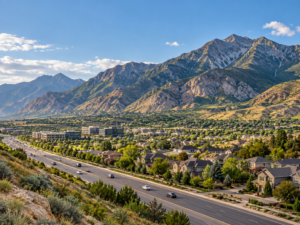
The Point of the Mountain creates a very different structural environment. At a newer home near Silver Flower Court, the owner wanted to terrace a steep side and rear yard. The engineer designed multiple low retaining walls using heavy interlocking concrete blocks, compacted structural fill, granular bases, and drainage systems behind each wall. Sandy soils, steep slopes, strong winds, and water infiltration all have to be considered together in that part of Draper.
Draper also still has older homes. At a 1950s property near 1300 East and 13300 South, the engineer found stick-built roof framing with an unusually narrow ridge member and misaligned rafters. The framing would not be built that way today, but it had performed for decades without obvious distress, so no emergency repair was recommended.
The engineer’s Draper files repeatedly show the same practical lesson: water, slope, footing support, and age have to be considered together.
A crack may come from foundation movement, corroding rebar, poor drainage, or a support that is rotting below grade. The right repair depends on which of those is actually happening.