Two of our clients asked us engineers to scope out a property in Sandy Utah a couple months ago. We inspected the house and gave the clients our professional opinion about what would need to be done to make this house safe to live in. The reason they called us out for inspection of this house is because they were considering buying it and wanted to see just how much money they would need to put in to make it safe. Just about a week ago, those same two clients asked us to inspect another house they were looking to buy, which means they ultimately decided not to purchase the first home we inspected a couple months previous. This time however, is a little different. The clients who called us to inspect this home in Salt Lake City Utah were now already under contract to buy this home, meaning they’ve already put in some amount of money to buy this home and stepping out of that contract would cost them. So this structural inspection had slightly higher stakes this time around.
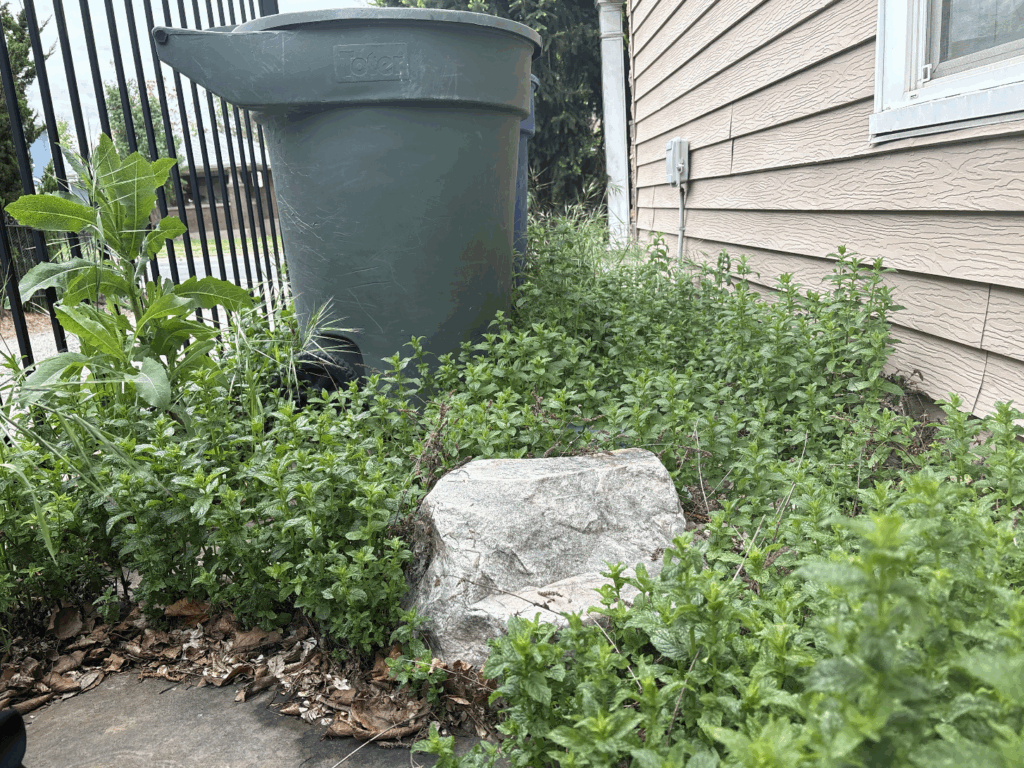
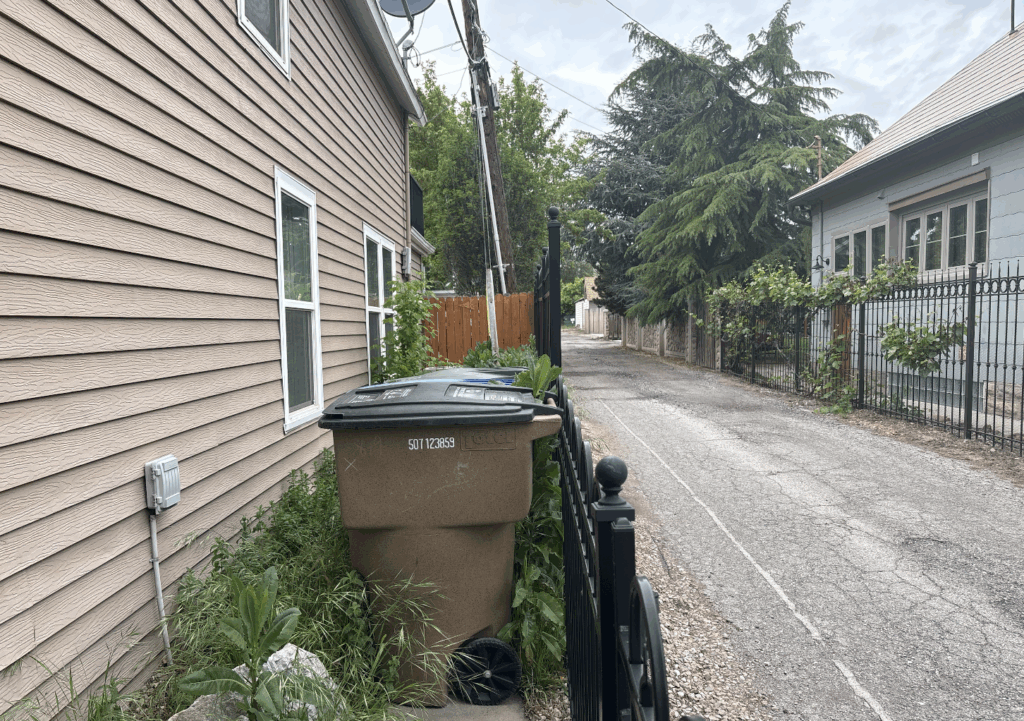
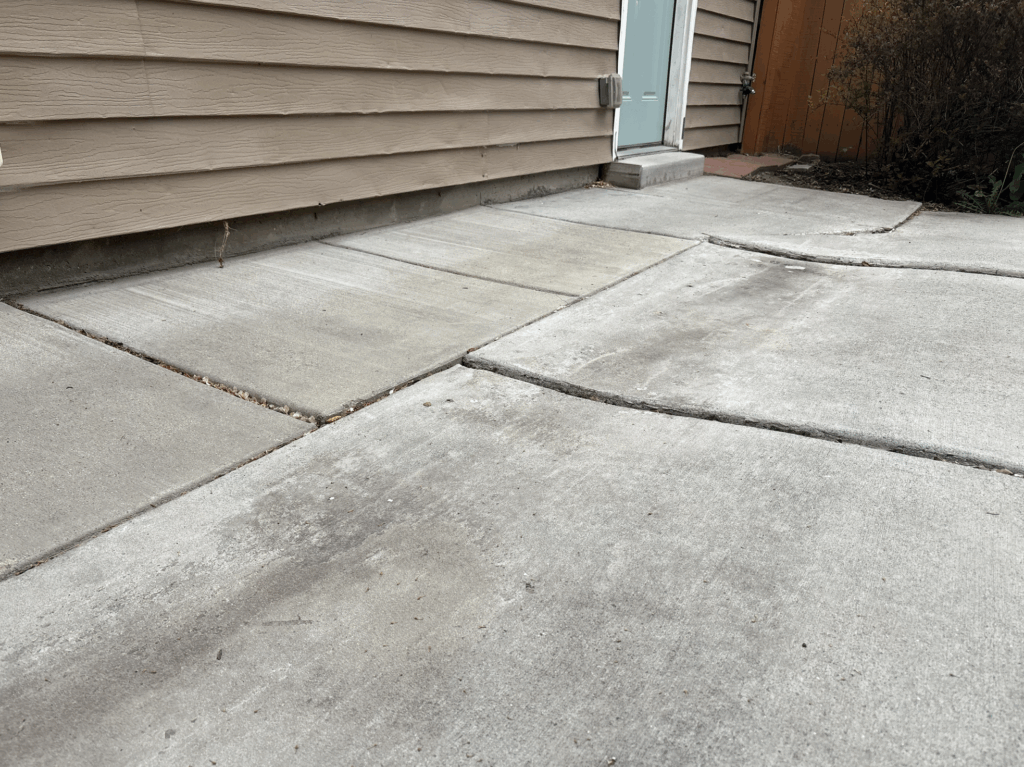
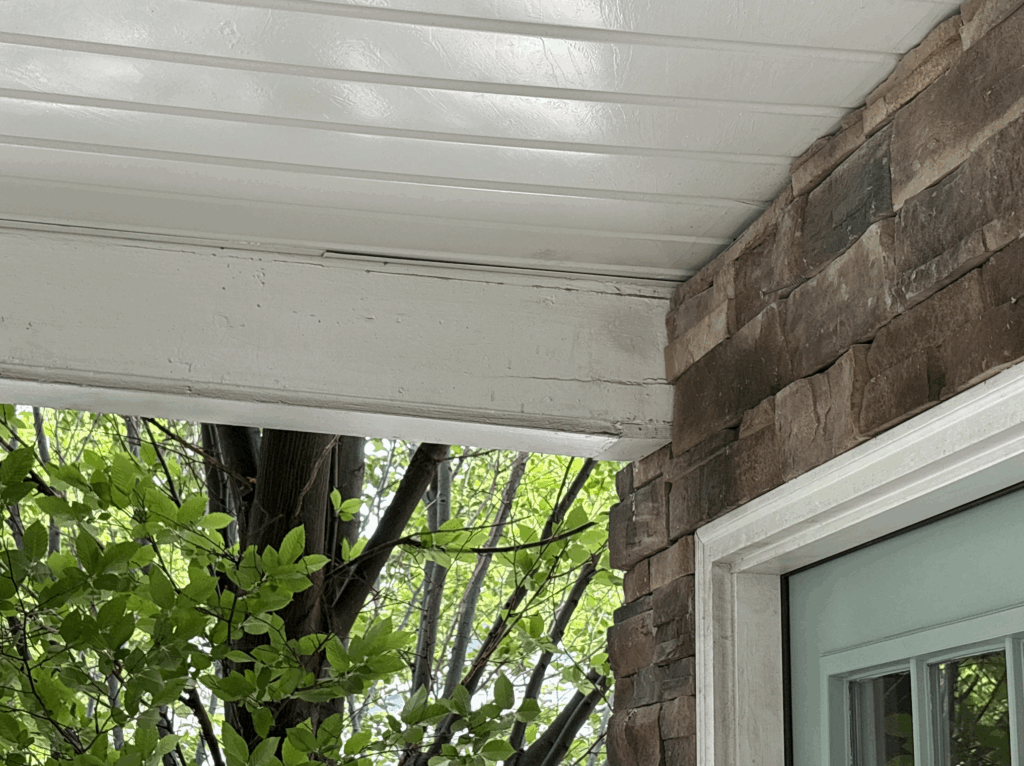
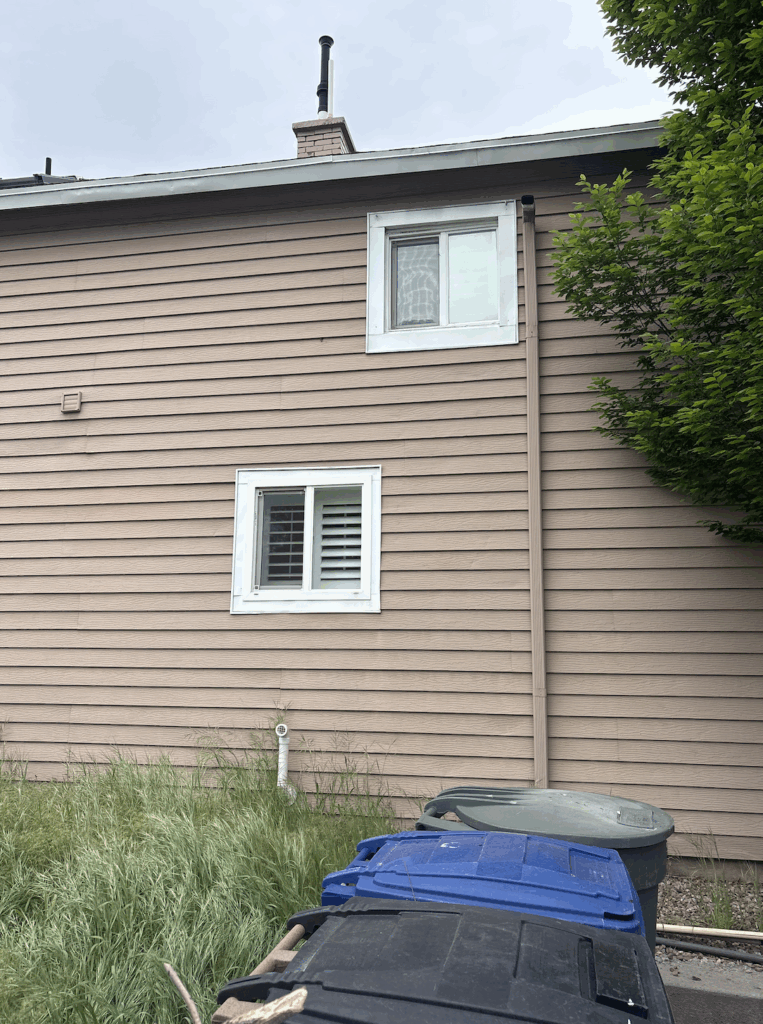
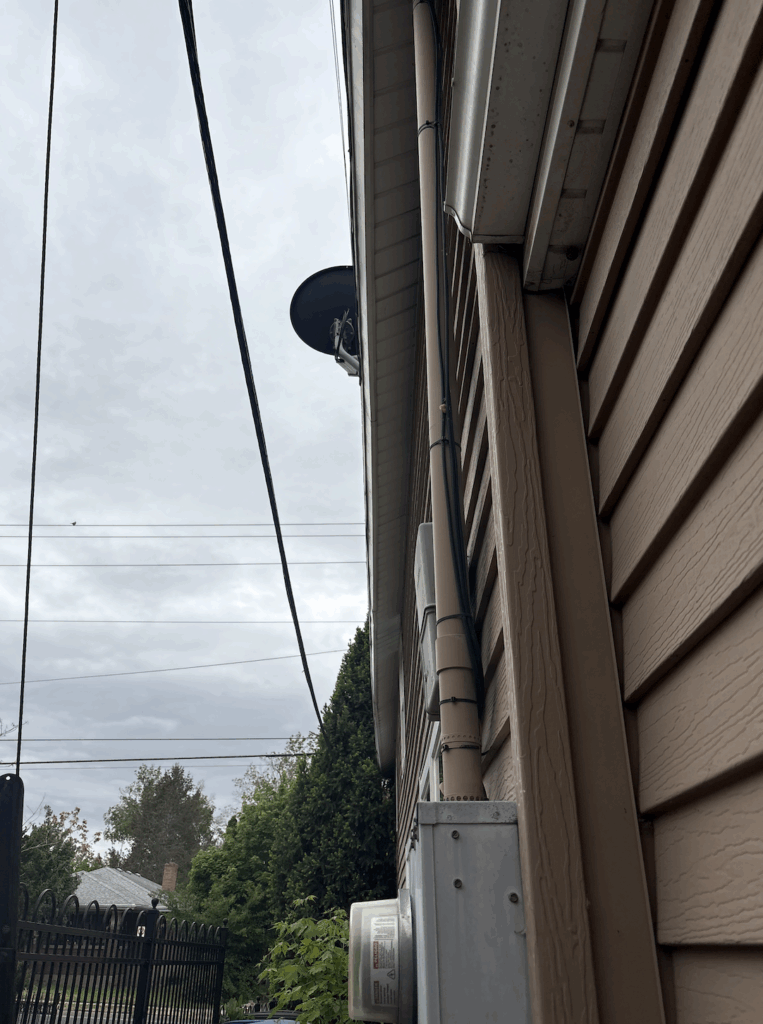
The main two concerns with this Salt Lake City home were the foundation and the attic. As always, before going into the crawlspace of the home to check the foundation, we walked around the perimeter of the house to see what the drainage situation looks like. The homeowners knew the drainage was horrible, they remembered from our last inspection with them that water near the foundation of the home can cause major problems. We saw the land grading around the house that moved water towards the home instead of away from it. Additionally, we saw rain gutters that pointed away from the home, but were literally not connected to any part of the room meaning the gutters were doing absolutely nothing to keep water away from the foundation.
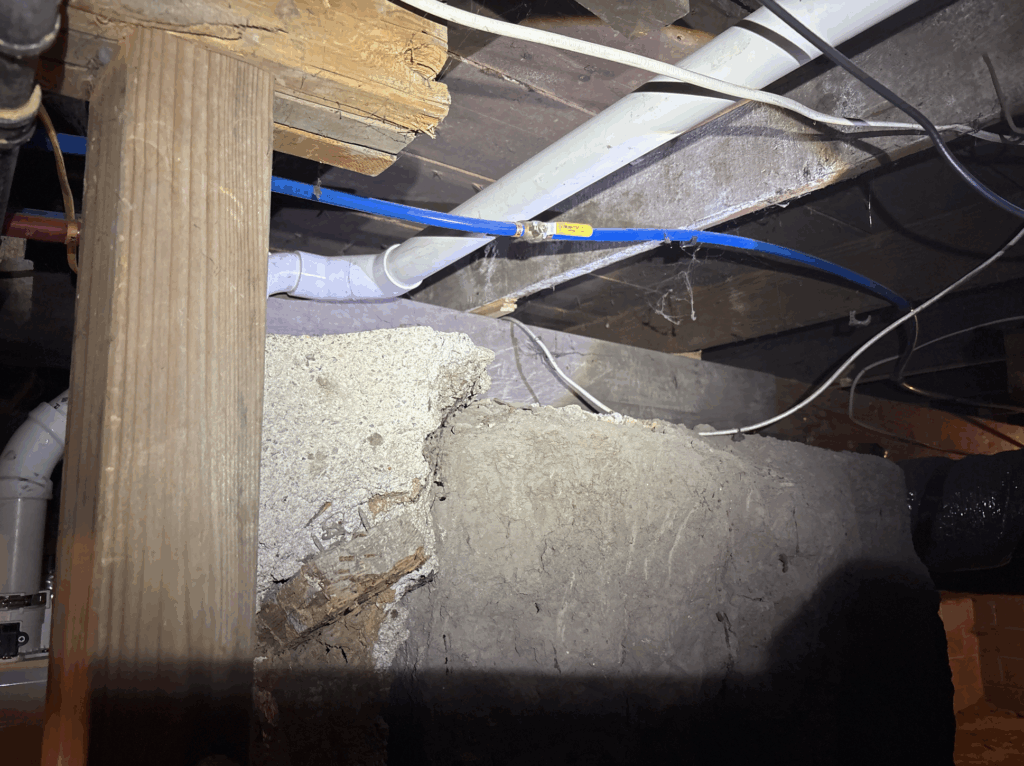
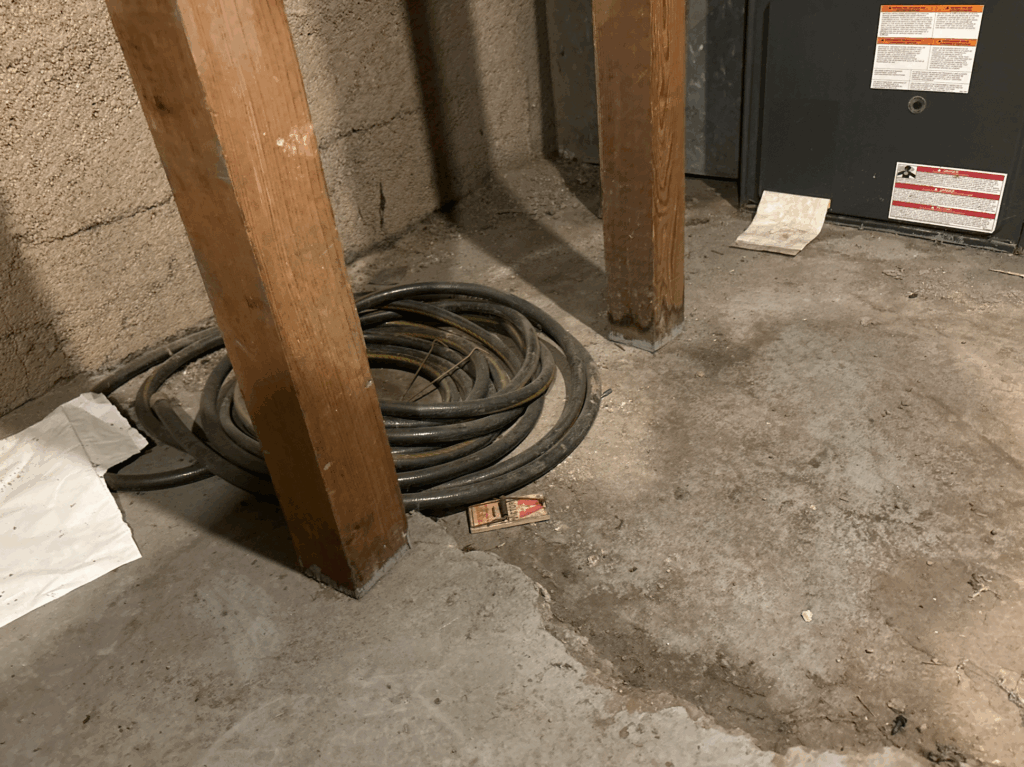
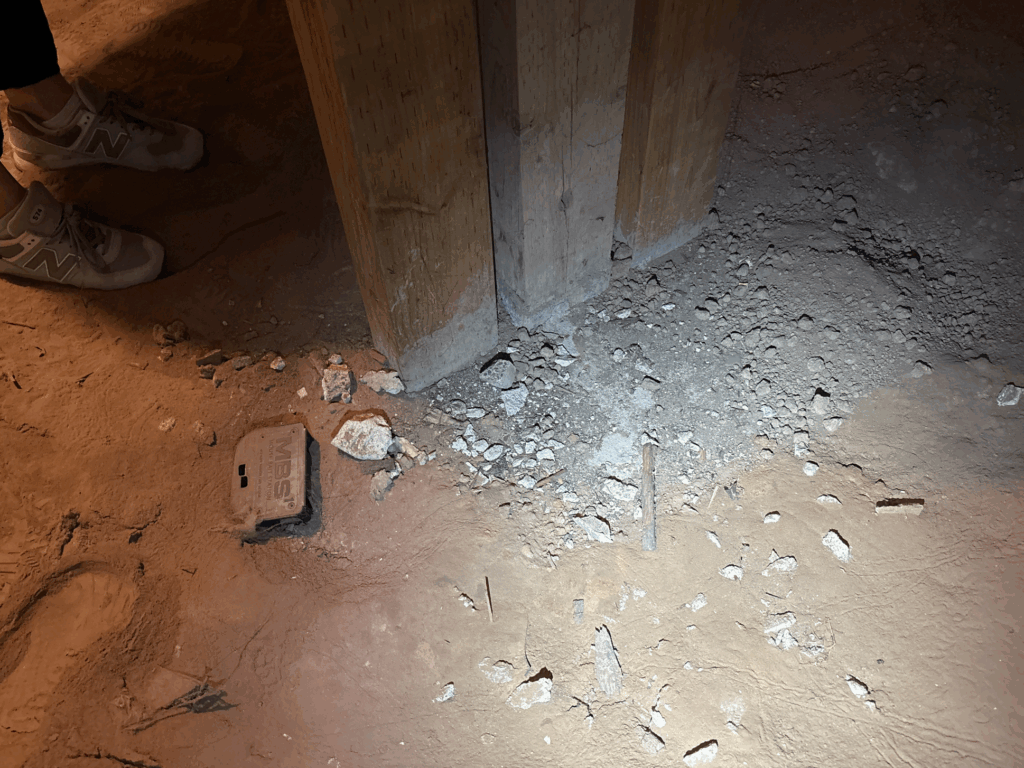
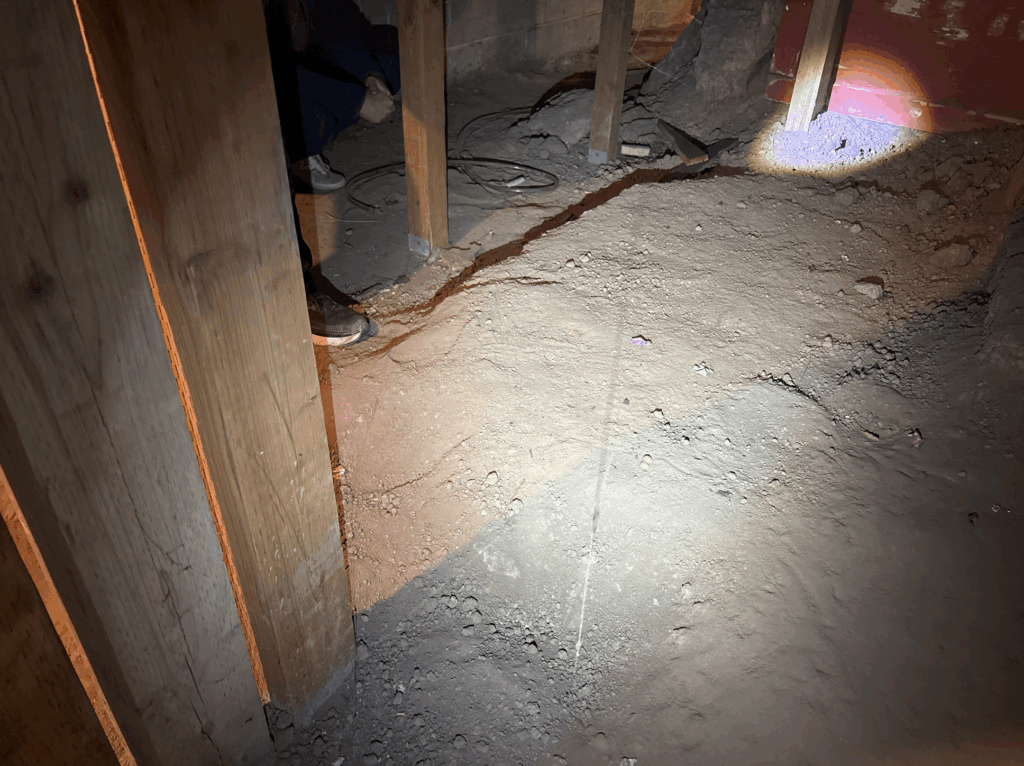
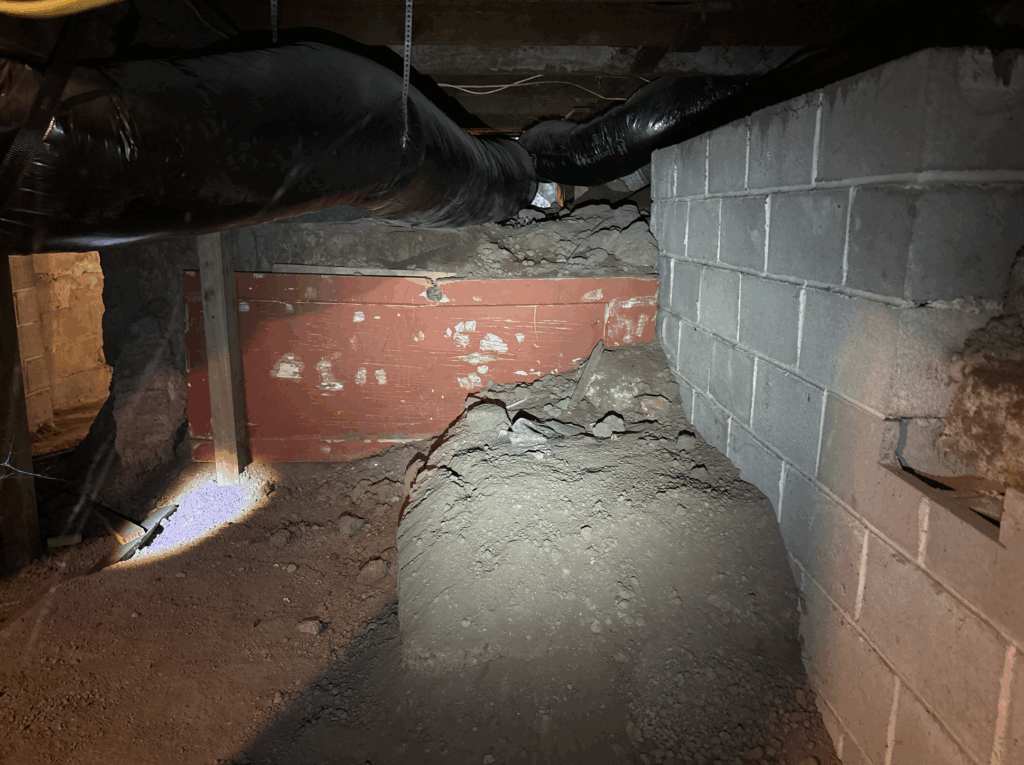
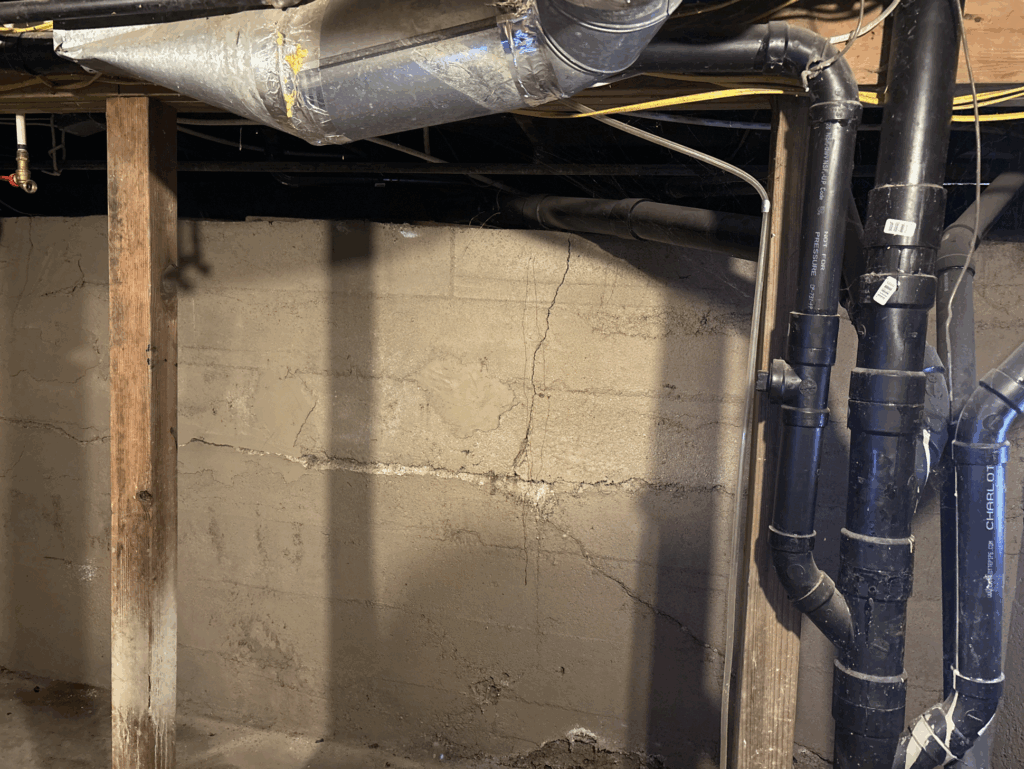
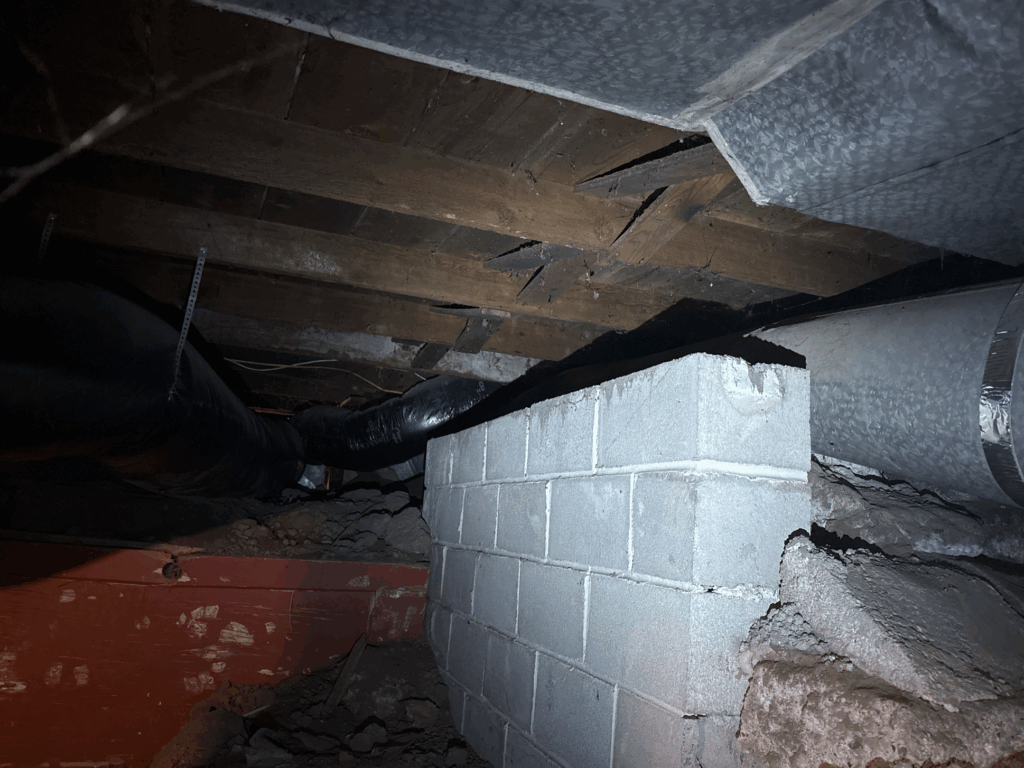
We then entered the crawl space through a space trap door on the floor located in a room right next to the back door of the home. The crawlspace was filled with all sorts of types of structural components. It was fairly difficult to recognize each element, the load it was supporting, and where it transferred the load. Our clients, now under contract to buy this home, were really worried about all the cracks and other signs of damage found in this area, and they had the right to be worried. At first glance, it looked pretty bad down there, but what we found was actually surprising and great news for our clients to hear and understand.
The structure appeared at first glance to have a lot of red flags, but for each red flag, a solution that was already in place was identified. For framing that was bending, supporters were found to be added late after bending already occurred. For cracks, additional reinforcements were made to keep the cracks from growing. For retaining walls that started to fail, additional support was added. There were many red flags, however, it appears that someone had noticed these structural failures some amount of years ago and fixed them so they wouldn’t continue to get worse. While some of these fixes did seem a little improvised or unprofessional, they were done correctly and performed the desired outcome of what they were supposed to do.
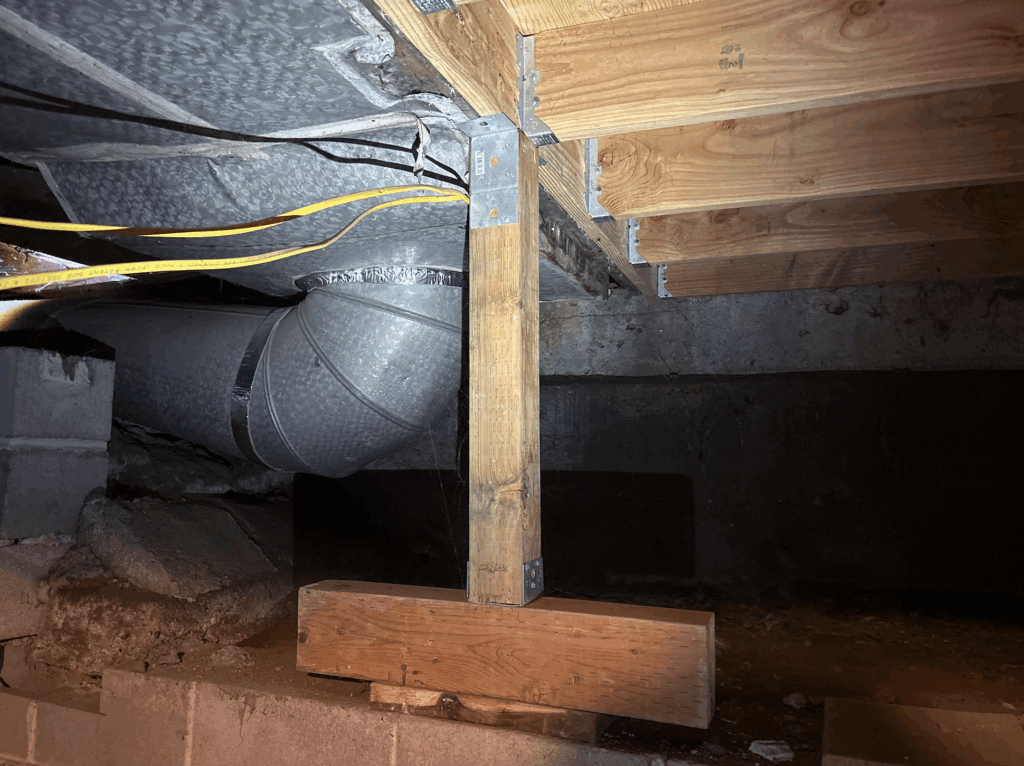
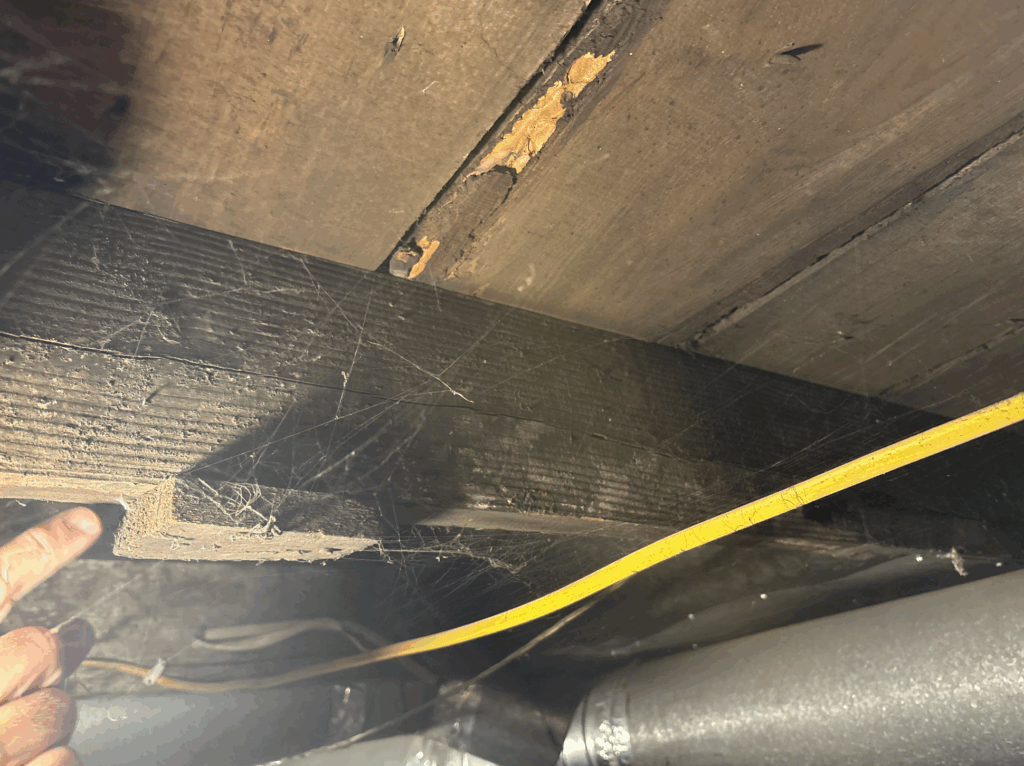
Additionally, evidence of knob and tube electrical work was found in the crawlspace. The clients were aware of this, but they thought that the knob and tube was no longer functional even though there were still remnants of it. Knob and tube electrical work was a common way to run electricity around your home many years ago, however, this type of electrical work ended up causing many fires in many different houses due to improper usage. On surface level, knob and tube electrical worked just great, but as time went on and the home owner tapped into this electrical circuit, sparks would fly from pulling too much electricity from a large course with not enough means to deliver.
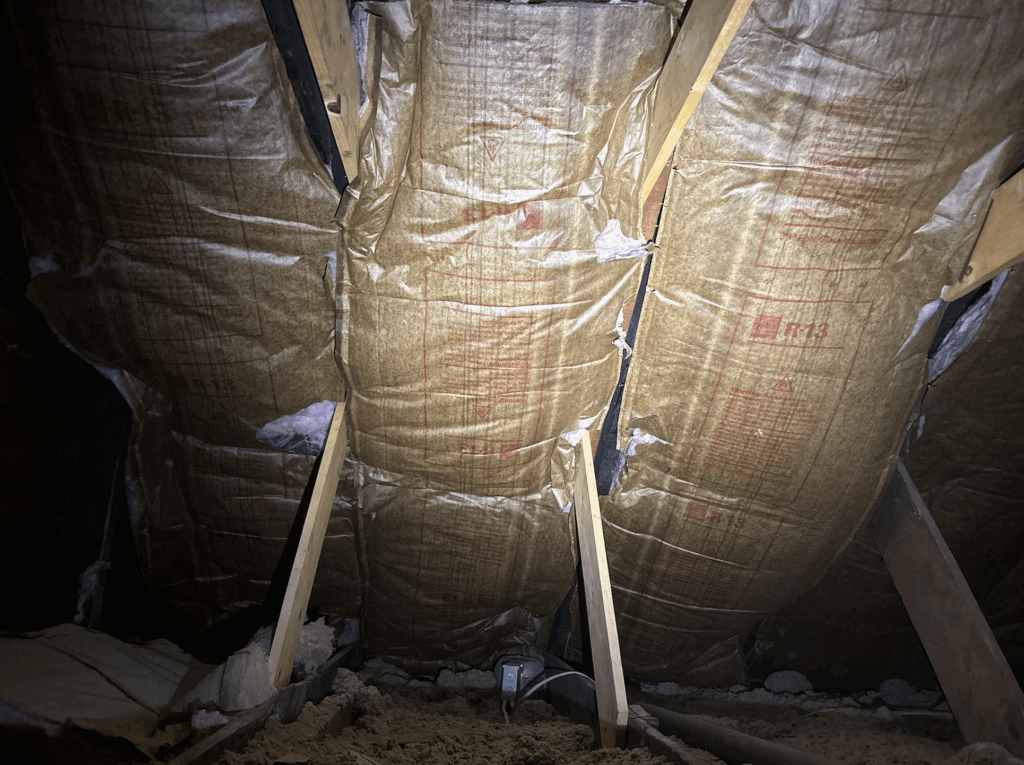
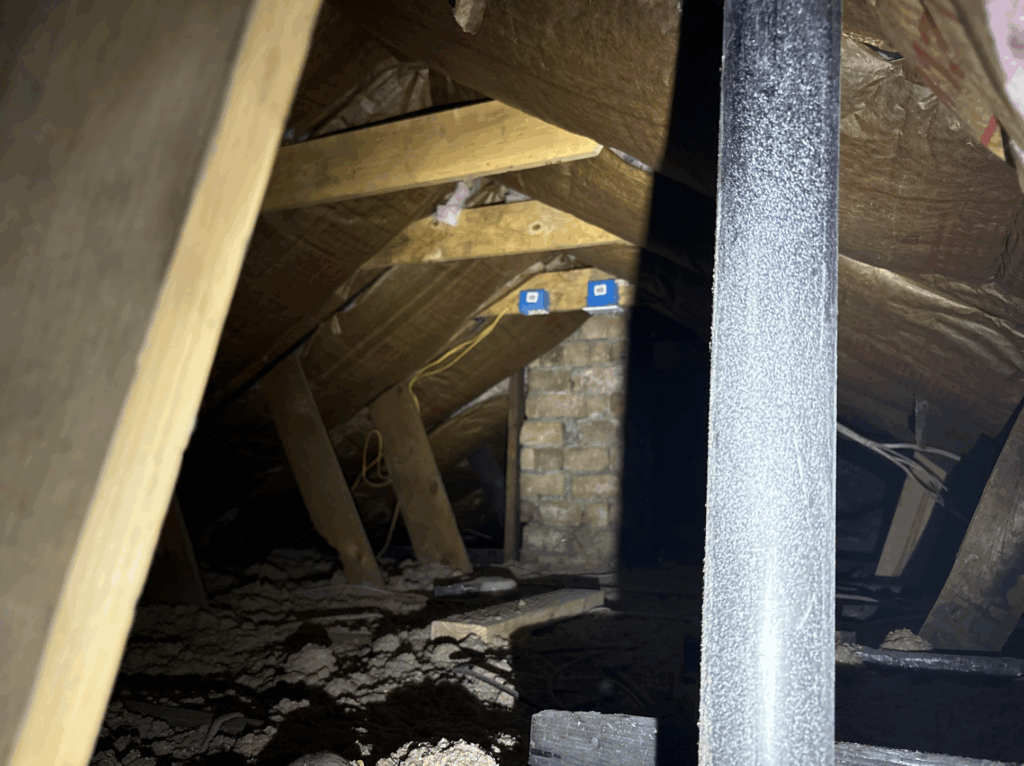
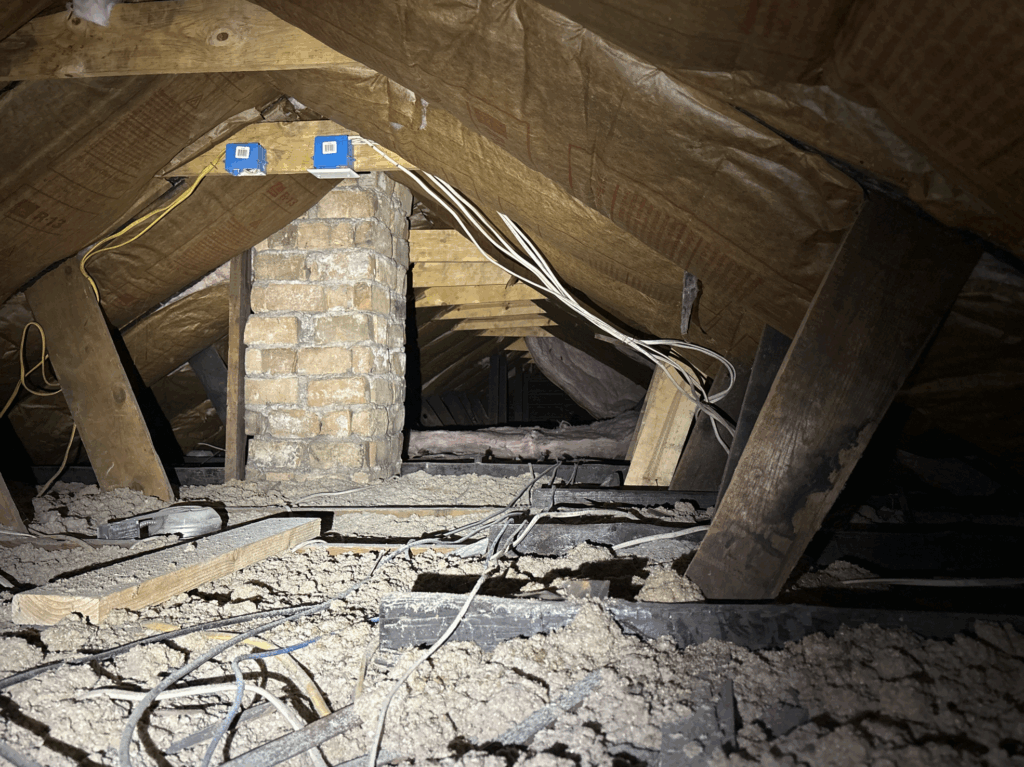
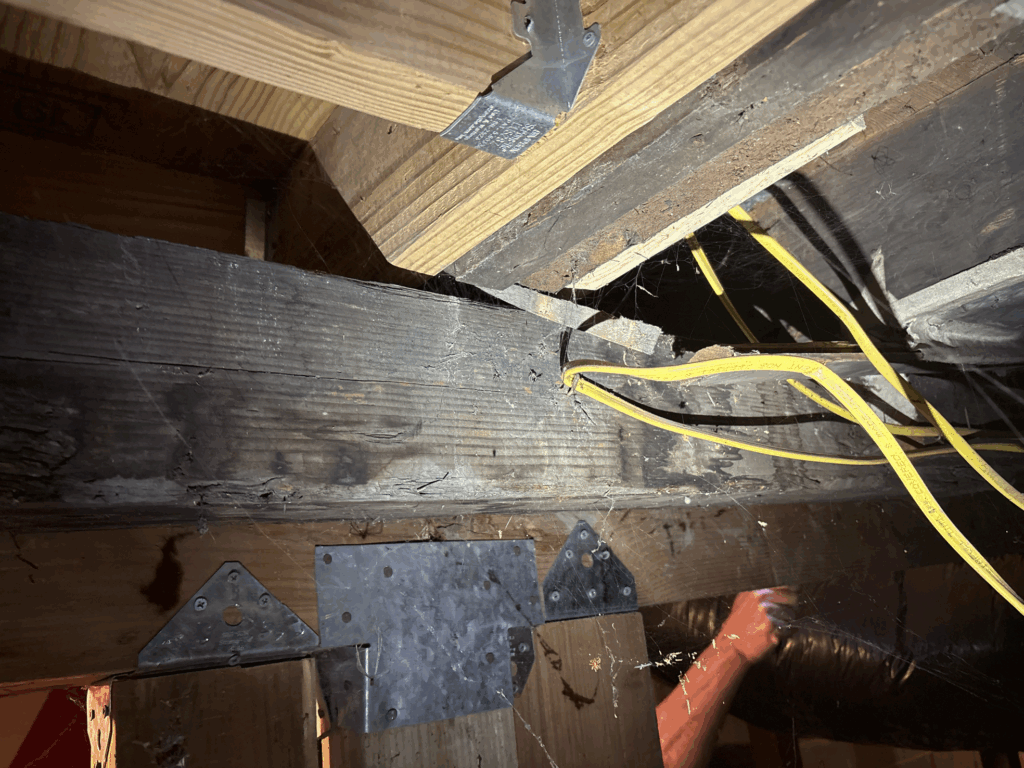
When we delivered the good news that not much work had to be done to the foundation, the clients told us that the attic was next. With little surprise they told us that there was an attic fire some amount of years ago. It’s possible that the fire was caused by the knob and tube, but the exact reason for the fire is unknown to us and the clients. The fire appeared to fill the attic which was observed by seeing charred from one end of the home all the way to the other. Occasionally a small fire in the home that causes minor smoke damage to the framing in the attic is tolerable, however, when wood framing is charred in any amount, the structural integrity of the lumber is impossible to know with certainty. This is exactly the problem.
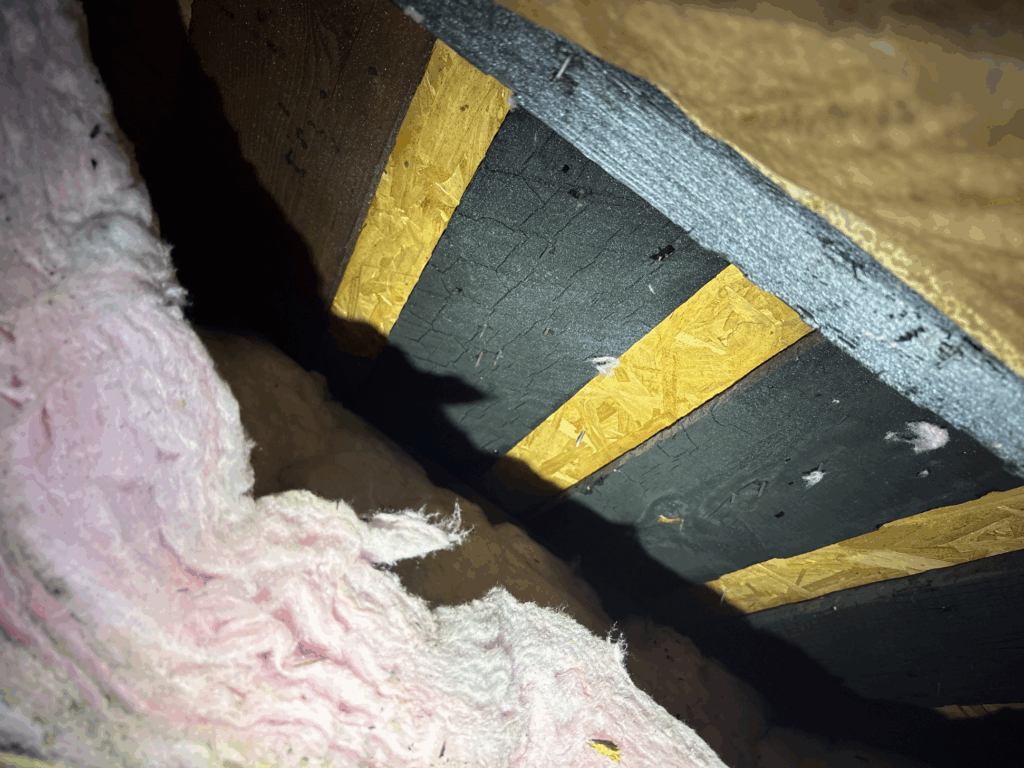
On one hand there were new pieces of lumber that were added after the fire to brace and support the charred framing, however, on the other hand, nobody would be able to tell quite how much load these burnt pieces of framing could really support. Another factor that makes the solution hard to pin down is that while most of the framing is charred, it did still hold for some number of years without collapsing. Ultimately we determined that allowing the charred wood to remain bearing load was unsafe. Even though it may have been there for some number of years with additional unburnt wood to brace and support it, it may still be a disaster waiting to happen at the first time of a heavy storm or blizzard.
This was the bad news, our clients thought that the framing in the attic was most likely still able to perform what it was intended to do, but it wasn’t. We recommended they fully replace the framing to ensure nothing dramatic happens. Our clients felt as though they had “broke even” because all the money they thought they were going to have to spend on the foundation, they are now going to have to spend on the attic. This isn’t the worst news in the world, but our clients do have their work cut out for them as they purchase and improve this home in Salt Lake City Utah.