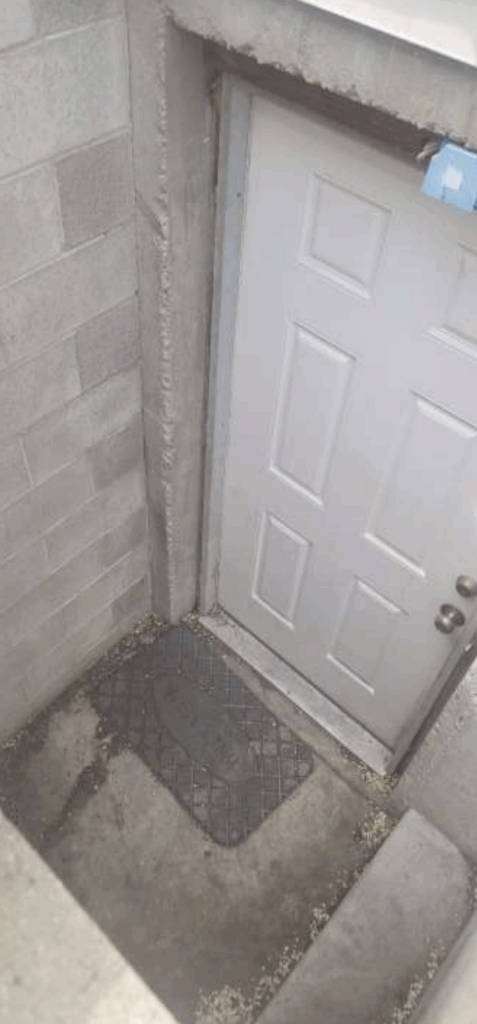
We were called out today to a home located in Salt Lake City, Utah to assess a basement door with a question surrounding it. The homeowner had owned the home for about a year and had some questions about an entrance to the basement level of his home. He finally sought out a professional to get the answer he has been looking for ever since he bought the home. The basement entrance looked a little rough around the edges, which makes sense why the homeowner might immediately raise some questions and concerns around it. Ultimately he gave us a call and we came to inspect the situation.
When we arrived at the scene we met the homeowner at the front door and he explained some of his corners to us. He showed us the substantial load of the first and second stories of his home that was resting on the basement level walls. The home was newly built in 2024 and was sold due to foreclosure from the previous owner. The current homeowner bought the home and immediately started fixing up all the interior and exterior walls and clearing out junk. He spent a lot of time refurbishing this home and didn’t want any unfortunate circumstances to arise. He pretty quickly took care of the cosmetics of the home after the time of him purchasing it, but the structural integrity is a lot harder to see the problems to an untrained eye.
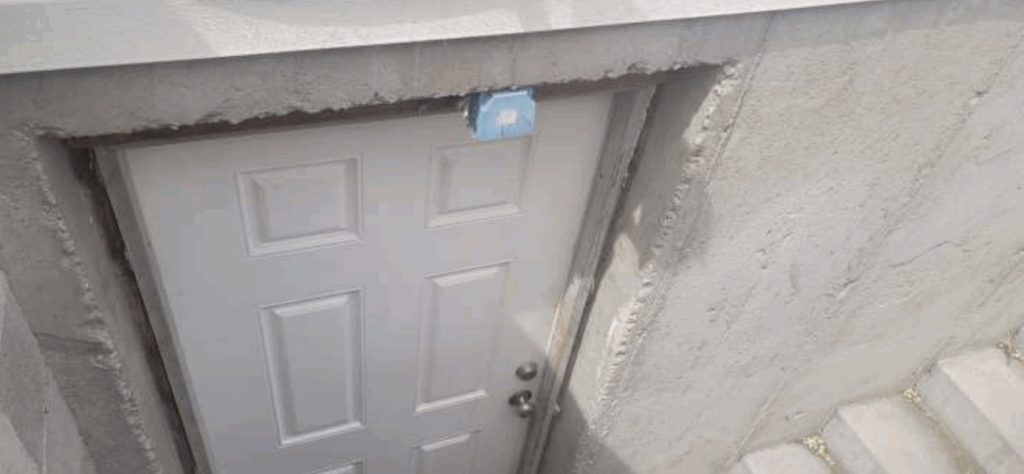
The homeowner explained that he wanted a safe place for future renters to live and wanted total surety for himself and the renters that they were safe in this newly refurbished home. He walked us around the side of the home to the basement door that was surrounded by a concrete wall, exactly how it’s supposed to look. The scene looked a little raw with slightly chipped concrete surrounding the door at its wall framed points. On a structural level, the chips aren’t significant and won’t compromise the security of the basement level due to their size and location. The white door looked a little rough around the edges as well, but the homeowner put a black welcoming mat right in front of the door to make the space seem a little more friendly to the potential renter and to us.
The first alarming detail we noticed was the outlet stuck directly on the top of the concrete wall surrounding the door. To walk through the door you would literally have to walk right underneath the outlet. This raised concern not because of any electrical hazards or head-bumping hazards, but the concern was based around how the builder got wires to the outlet through a concrete wall. Occasionally a builder will make a cut where they absolutely shouldn’t make one. Making a cut in framing, foundation, or any structural system can’t compromise the entire structure. This possible cut was most alarming because the cut would run through the concrete wall which supports a massive load from above.
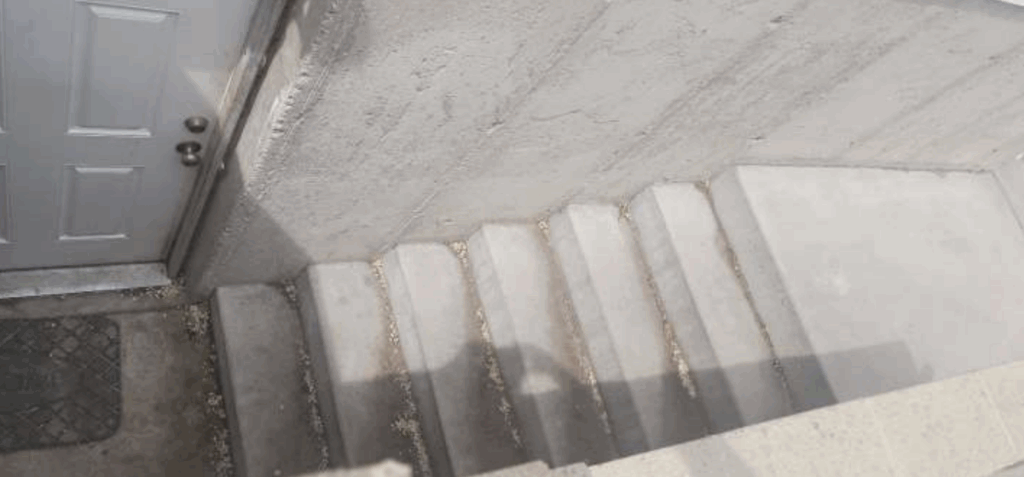
We inspected the wall, specifically the area right above the door which the outlet is attached to. We saw small chipping, just like every other part of the concrete wall edge and subtle gradient color changes as we moved from one end of the concrete to the other. We found that no cuts were made in the concrete and that the structural integrity of the wall was not compromised at all. The basement floor and specifically this entrance was completely safe and the homeowners’ worries were finally put to rest.
The homeowner did request that we put our observations in writing and send the report to him for any possible renters that have any type of concern. This will allow the homeowner to show the possible renters our report and be reassured that the structure is safe and sound despite having a random electrical outlet on the door frame of the wall. It is hard to see through concrete, in fact it’s impossible, but for someone with a trained eye who has seen it all, this was an easy diagnosis for the problem that was really no problem at all. This home in Salt Lake City is a lot like many other homes in Utah. Sometimes there can be random unknown variables that makes people think to themselves “why would the builder do that?” Ultimately it is always better to be safe and not sorry when it comes to something as expressive, massive, and precious as a house.