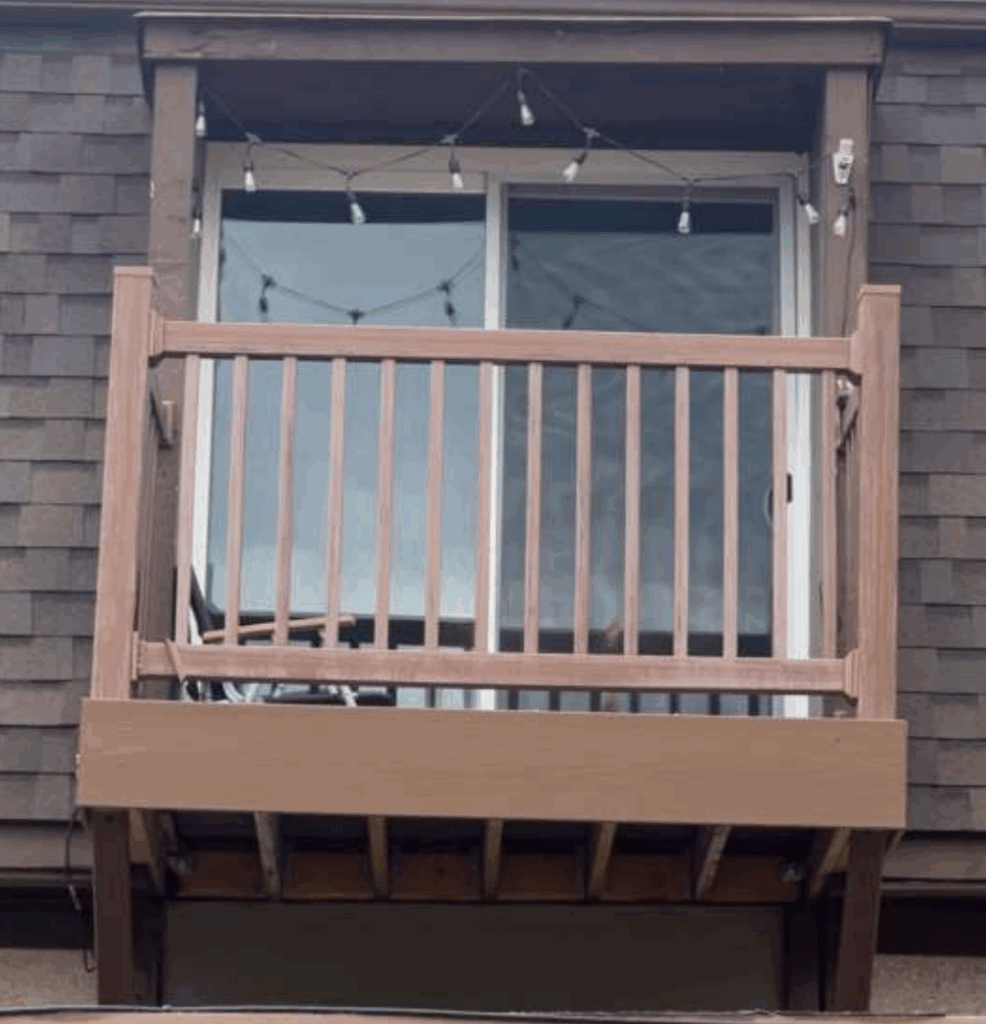
We were called out by the Willows Homeowners Association to perform a structural evaluation of the exterior balcony systems throughout the development site. The community includes multiple condominium buildings and townhomes arranged around central ponds that encourage constant pedestrian traffic. Balconies overlook these shared spaces. Their distinct purpose is to carry load every day safely.
The HOA’s concerns were straightforward. Residents had observed sagging in the balconies. Some balconies appeared to dip at the outer edge. In certain locations, connections looked strained. The question was not whether a single balcony had an issue. The question was whether the system as a whole was responding to age and previous repairs predictably.
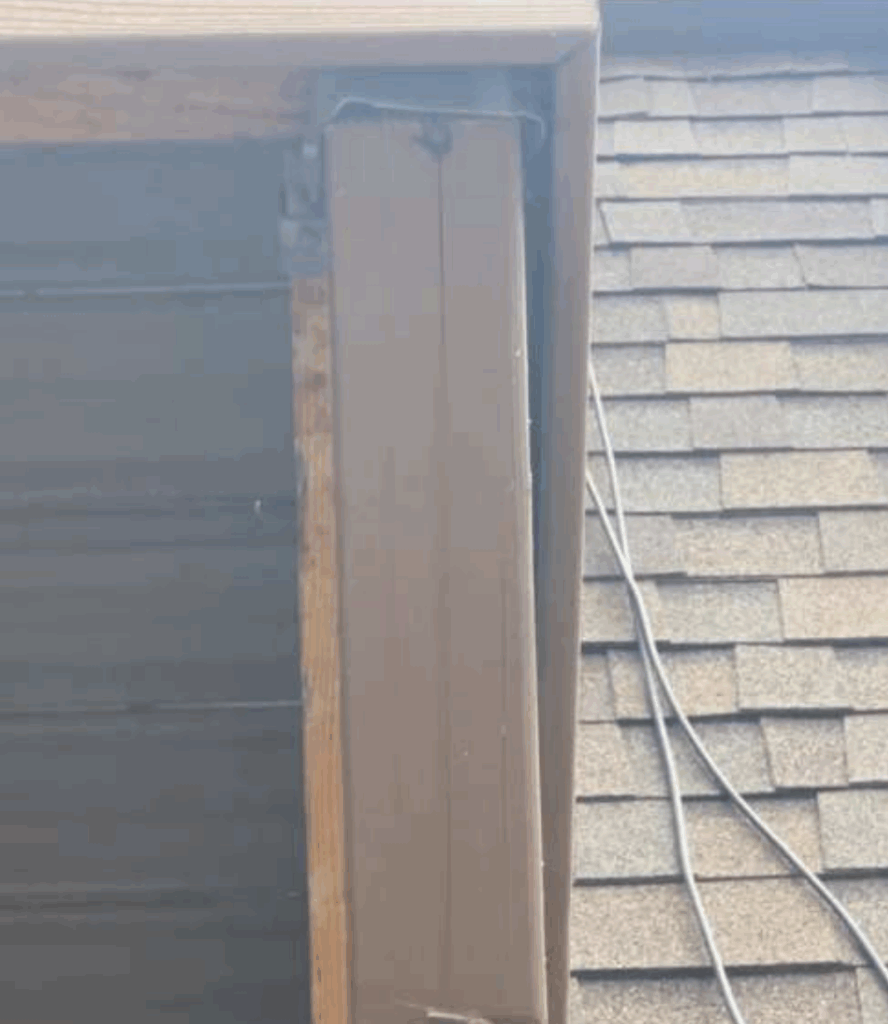
From the ground, some balconies appeared serviceable while others showed visible distress. What became clear during the inspection process was that these conditions were not isolated anomalies. They reflected the combined effect of original construction methods, moisture exposure, and subsequent modification efforts.
The original balconies were framed as cantilevered systems. Untreated floor joists extended outward from the interior structure approximately five feet beyond the exterior wall to support the deck surface. There were no vertical posts at the outer corners. The joists alone carried the load through bending.
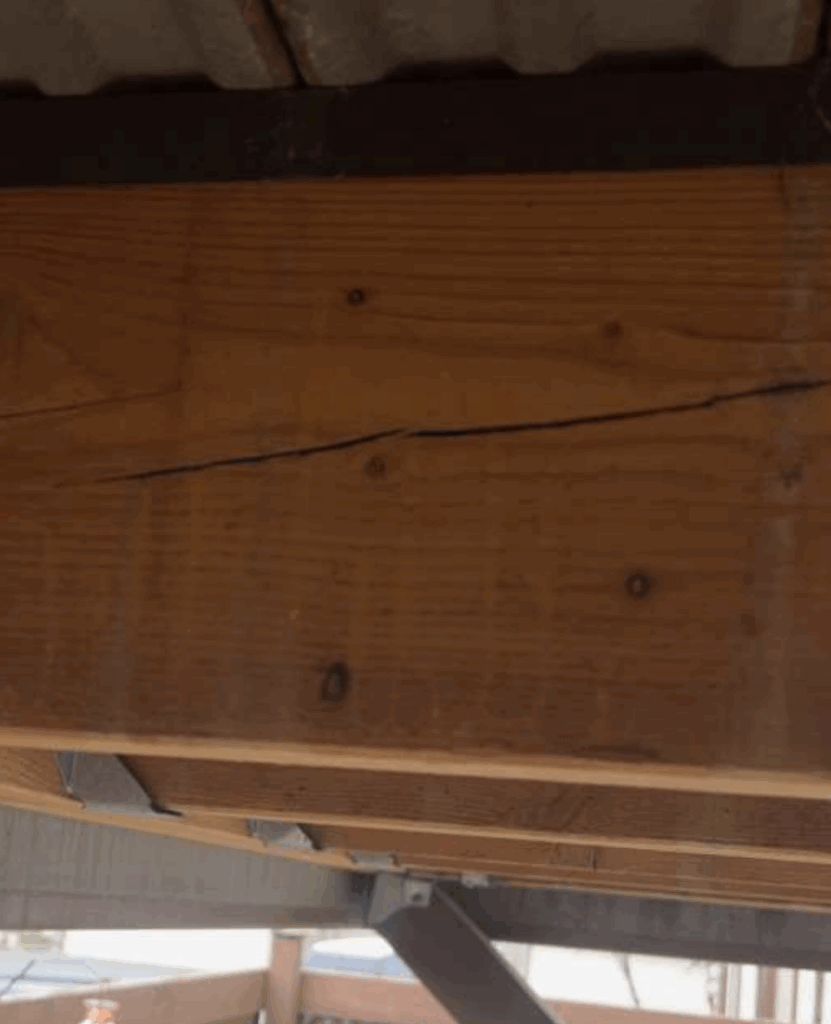
A five-foot cantilever is substantial, particularly for untreated lumber exposed to decades of weather. Over time, moisture intrusion occurred due to limited flashing and long term exposure. When wood absorbs water repeatedly, it softens. Its ability to bear load decreases. As the joists deteriorated, sagging became more pronounced.
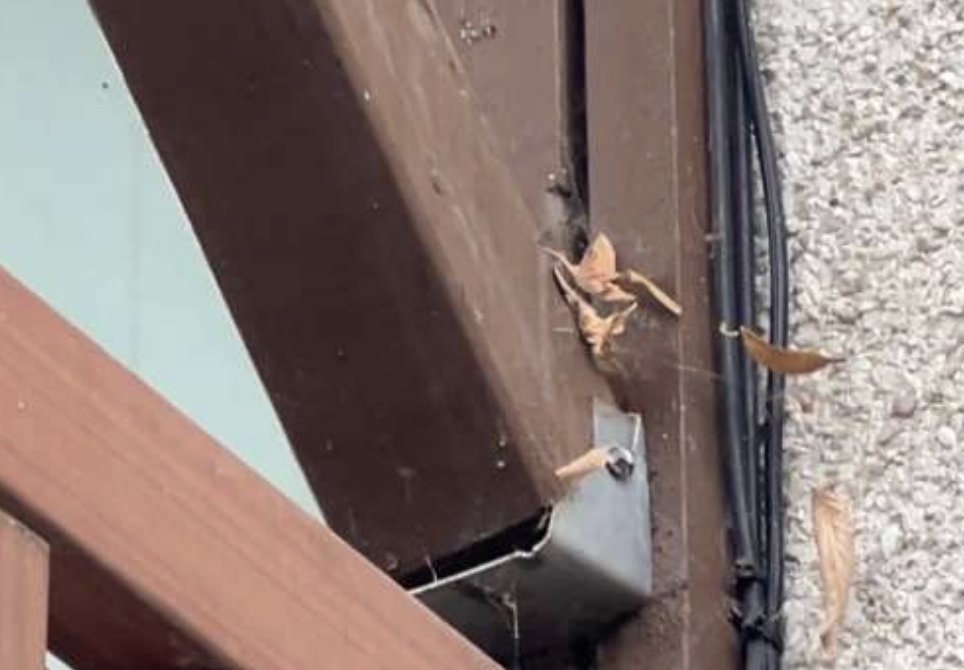
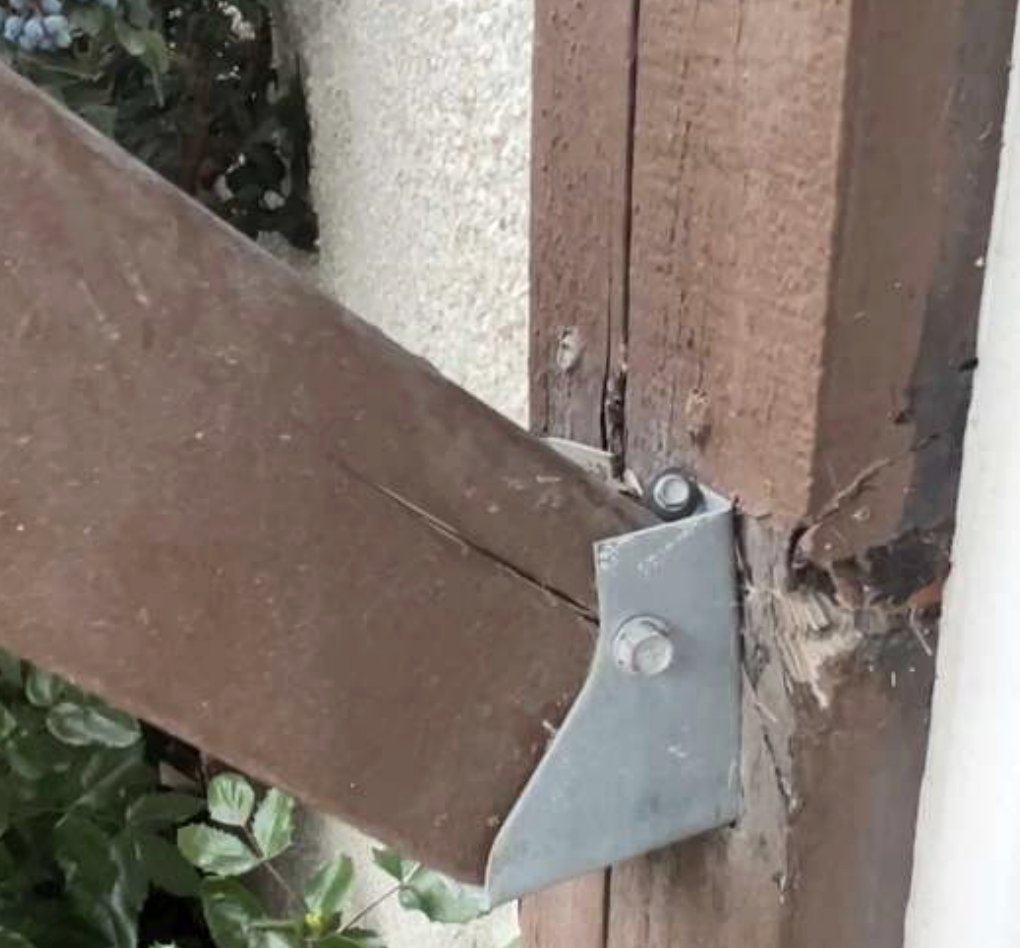
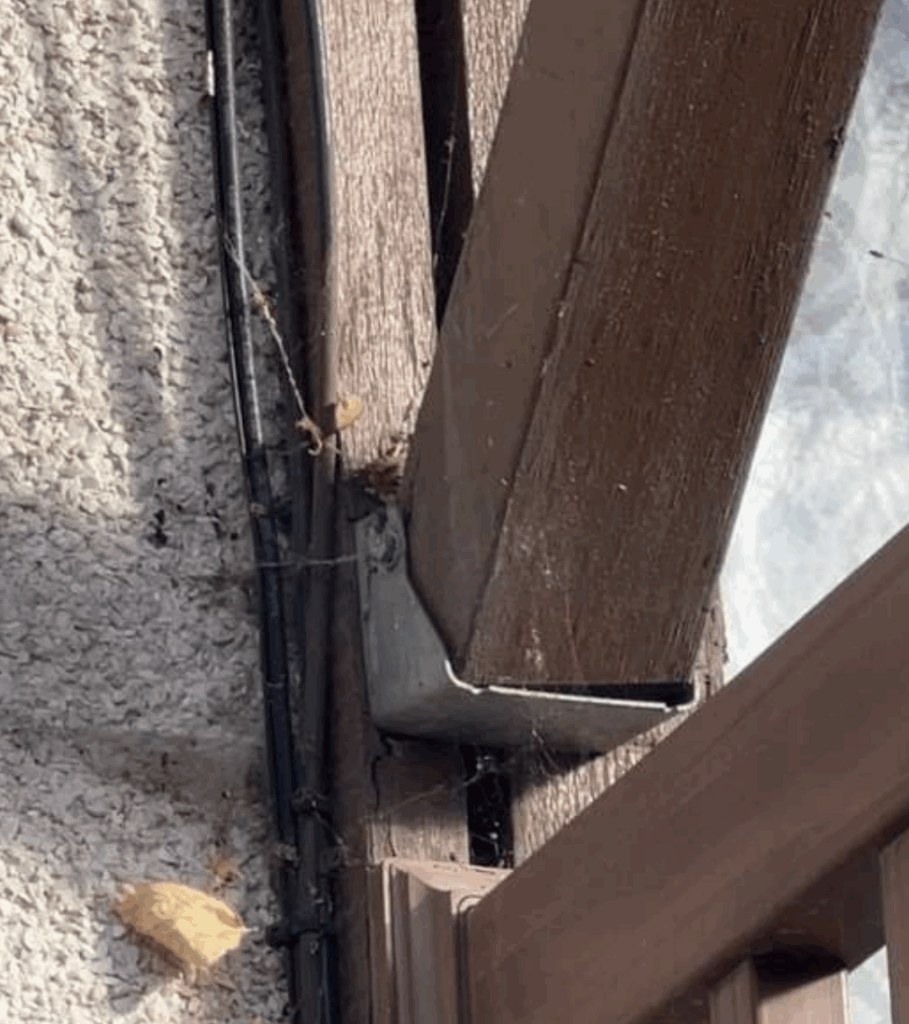
Sagging is not simply an aesthetic issue. It is evidence that the framing is deflecting under load. When one portion of a structural system softens while adjacent areas remain relatively stable, differential movement occurs. Connections begin to separate. Members rotate slightly. The system adjusts in ways it was not originally designed to accommodate.
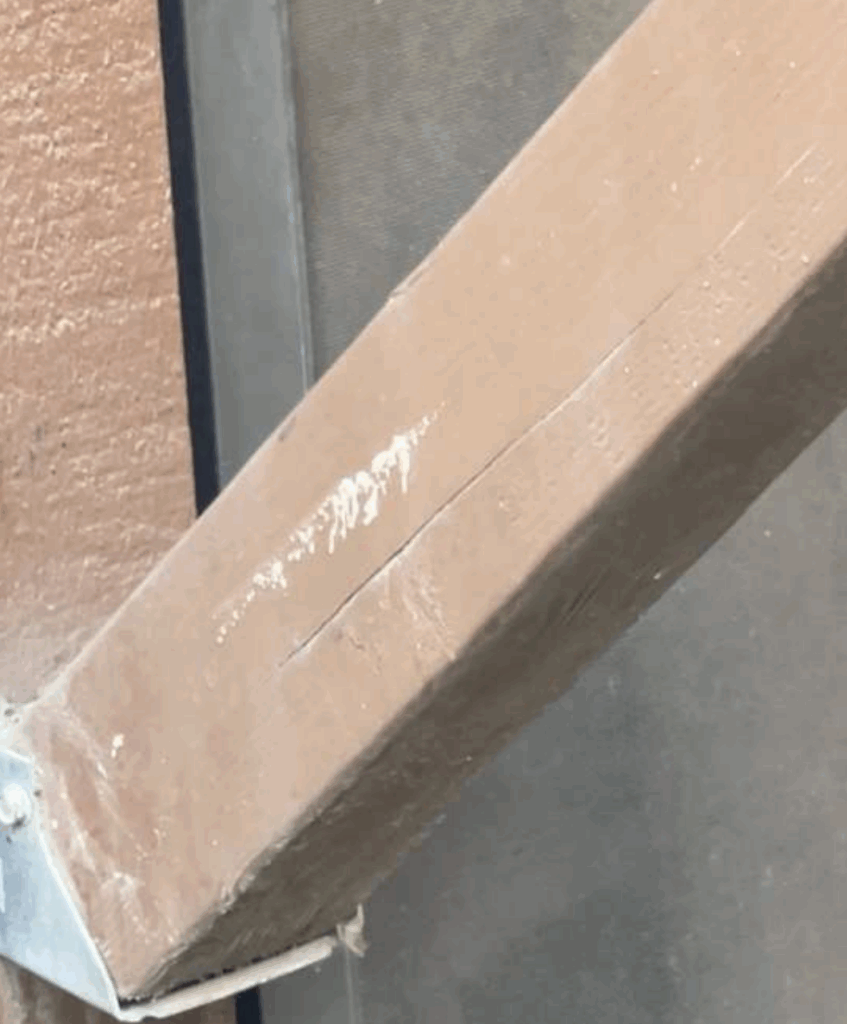
In 2009, a repair effort introduced diagonal support braces beneath many of the balconies. The intention was clear. Reduce the demand on the cantilevered joists by transferring load downward toward the building. Angled braces were installed to support the outer edge of each balcony.
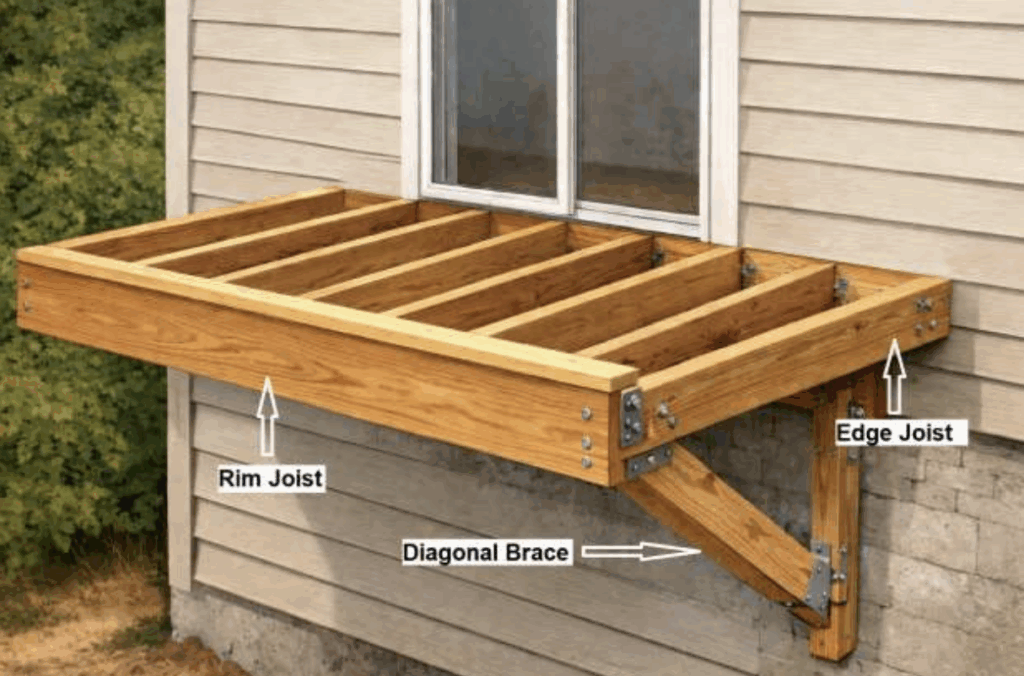
Engineering drawings prepared during later reconstruction work indicated that these diagonal braces were intended to connect to the outer deck joists rather than directly to the rim joist. That distinction is not subtle. It defines how the load moves.
When a brace attaches to the outer joists, the load path flows through multiple framing members. The interior joists carry the surface load to the rim. The rim transfers force into the outer joists. The outer joists then bear on the diagonal brace, which carries the load downward. The framing works together. Members share the demand.
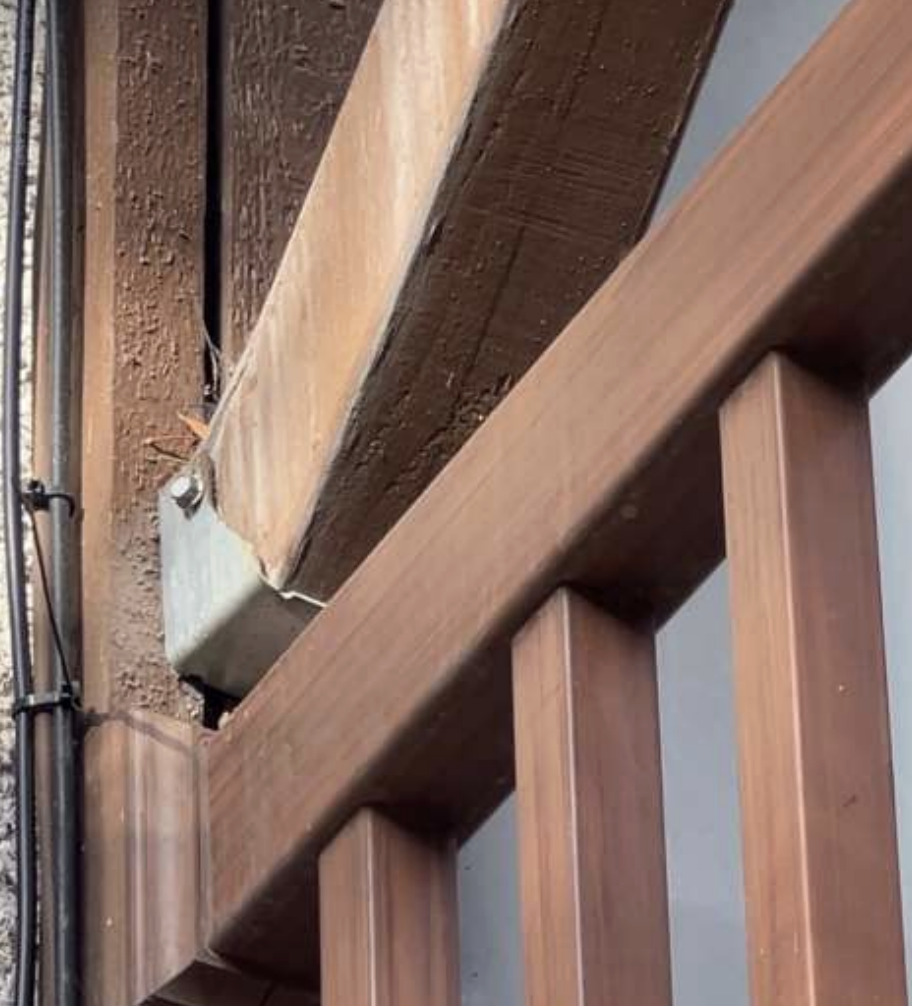
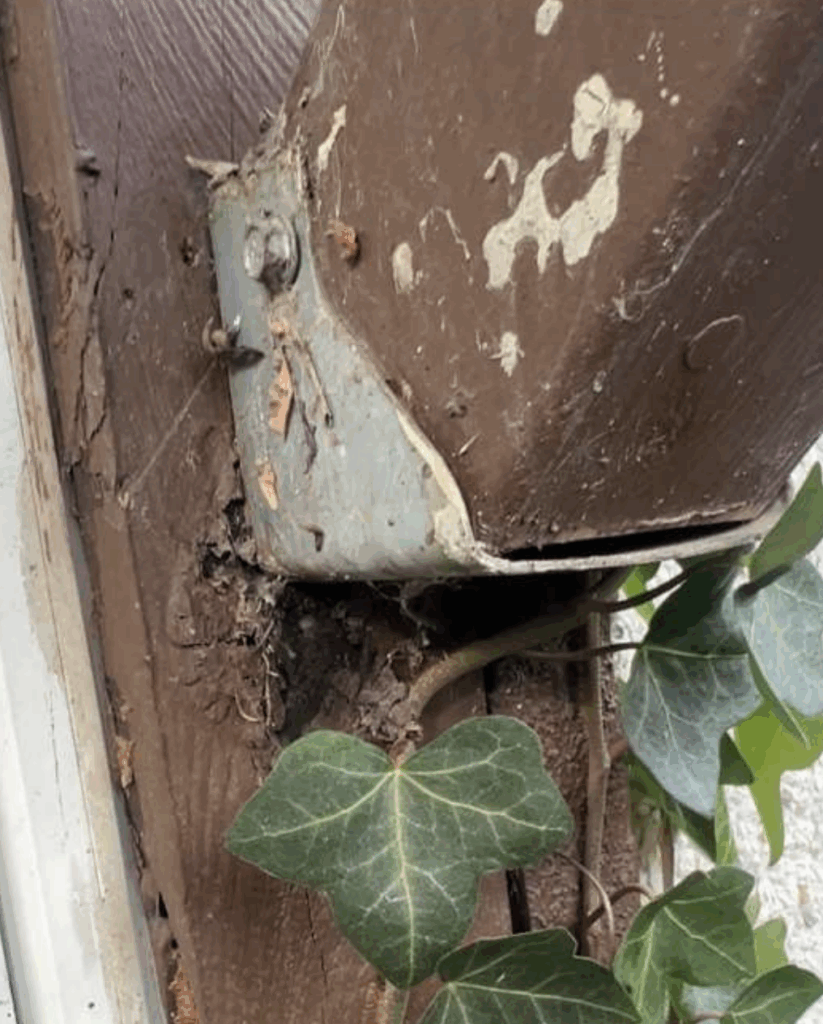
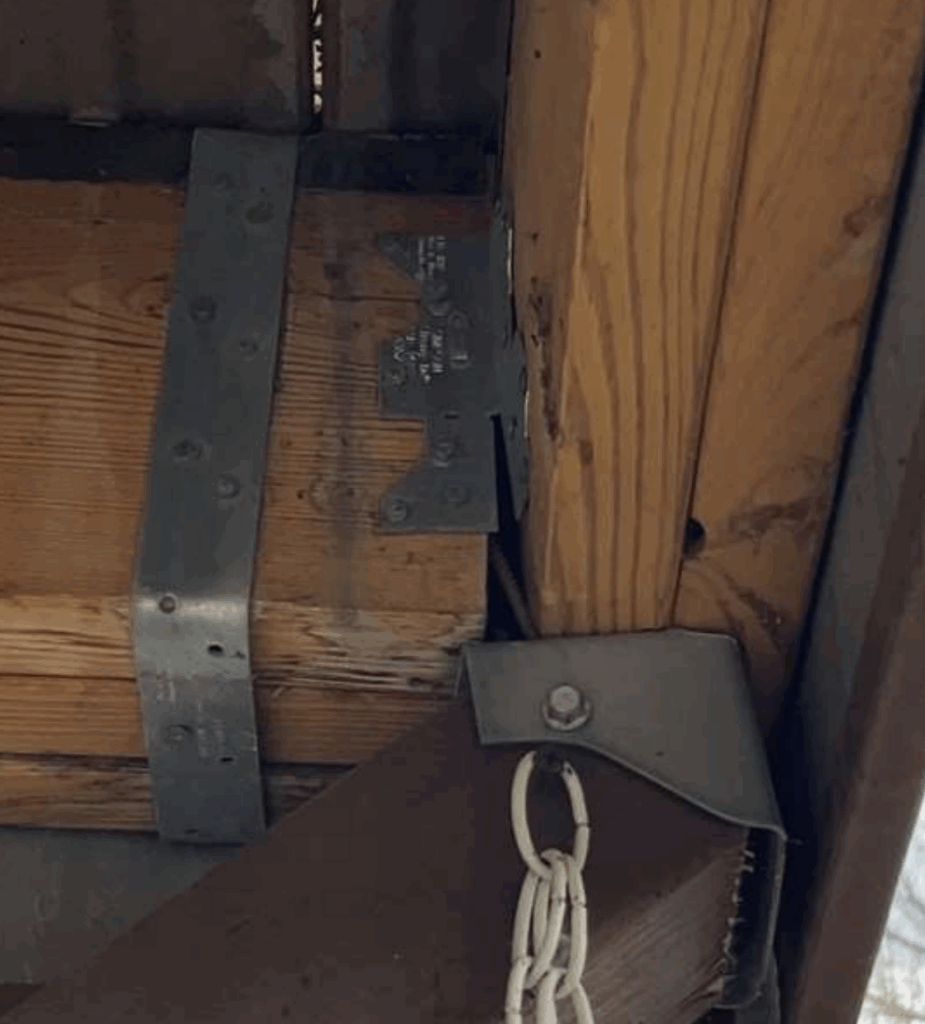
However, field observations during our evaluation revealed that in most cases the diagonal braces were attached directly to the rim joist. That installation differs from the design intent and significantly alters how the structural elements bear load.
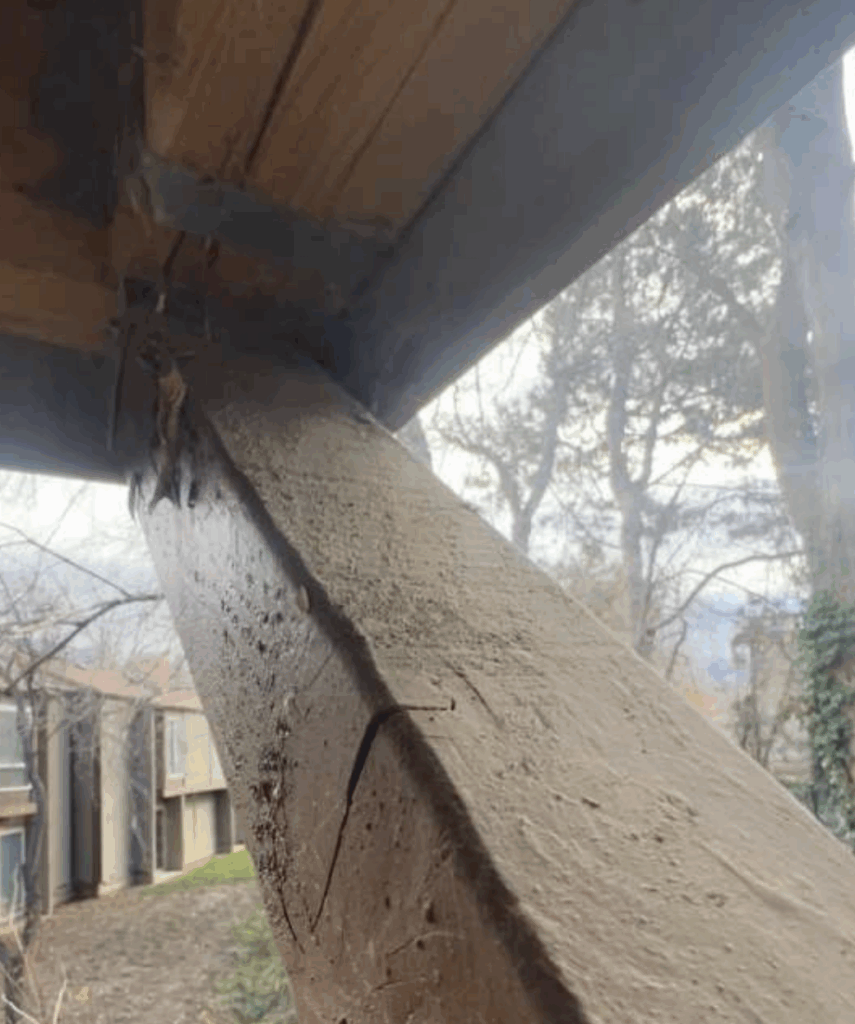
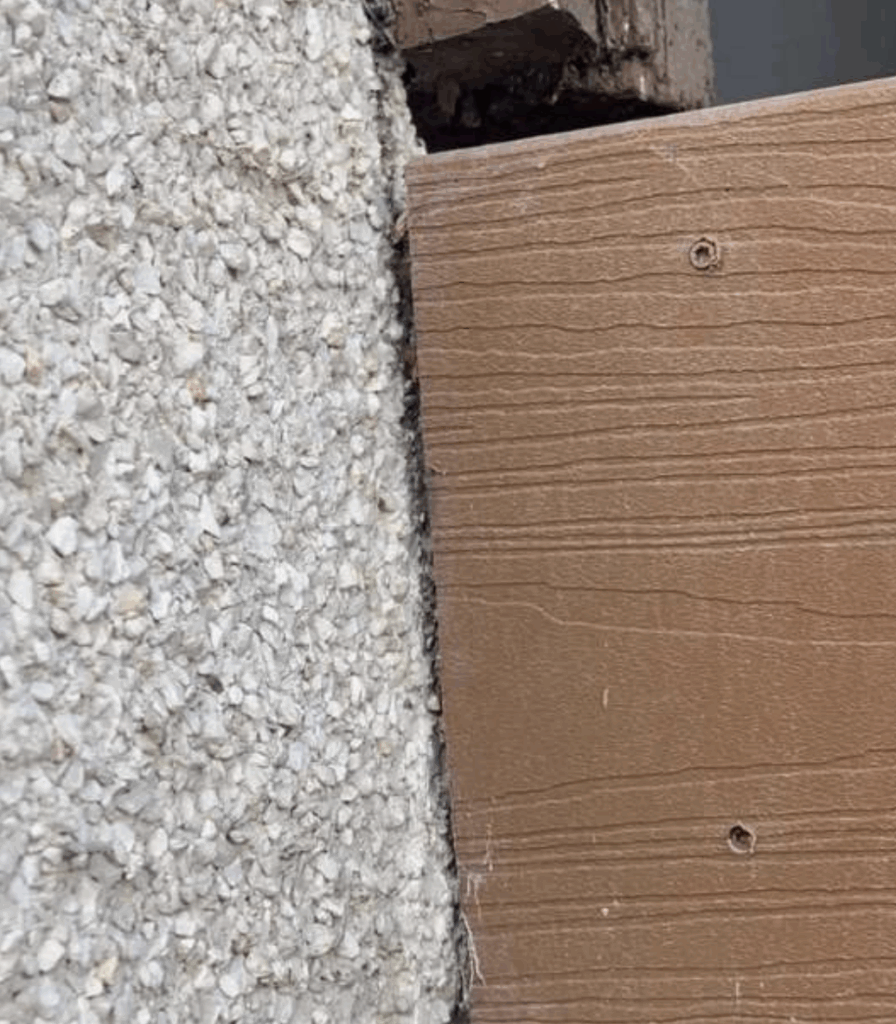
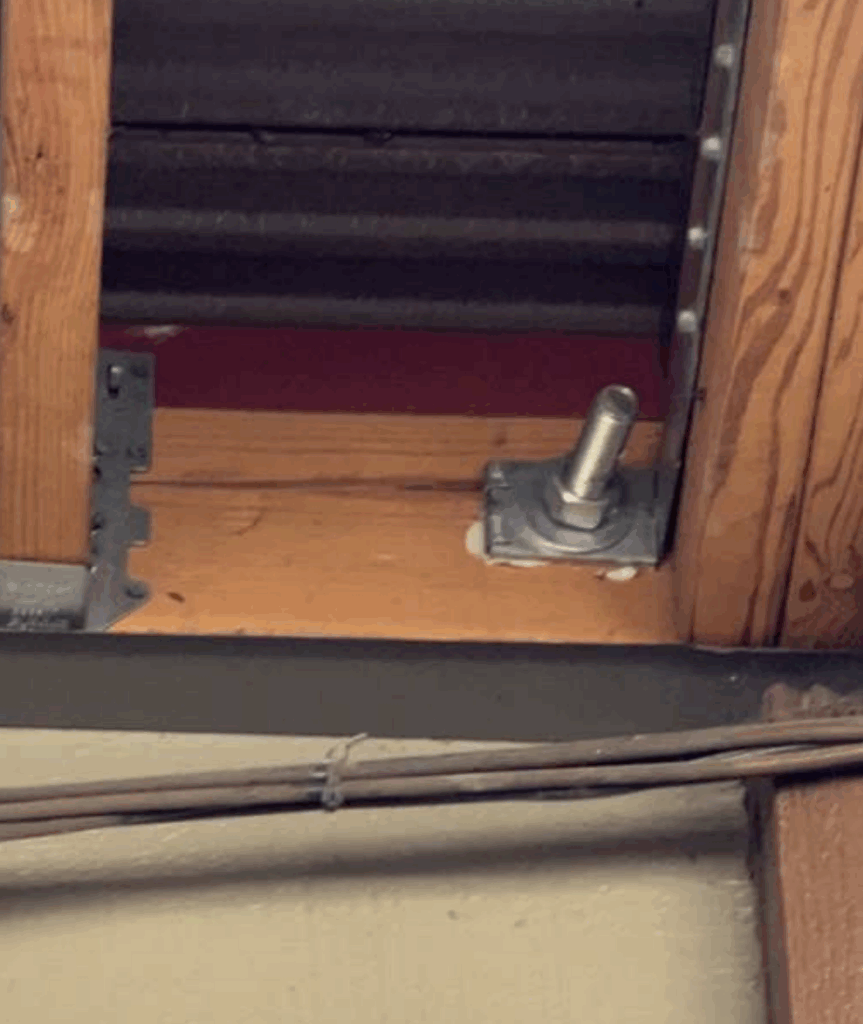
A diagonal brace does not only push downward. Because of its angle, it introduces a horizontal component of force. When that brace bears directly against the rim joist, the rim must resist both vertical load and outward thrust. Over time, this outward force leads to separation between the rim joist and adjacent deck joists. We observed gaps at connections. We saw rim rotation. In some locations, fasteners had begun to withdraw or deform.
These patterns were repeated across multiple buildings. The distress was consistent with the altered load path created by the brace attachment location.
One unit within the development provided an important comparison. The brace configuration at this balcony most closely matched the original design intent. Notably, this unit did not exhibit the same rim separation or deformation observed elsewhere. The framing there was performing more predictably. That observation reinforces the conclusion that attachment location plays a critical role in long term performance.
It is important to note that not all balconies are in the same condition. Many exhibit early or moderate signs of movement that can be addressed with targeted intervention. A smaller subset has progressed to more advanced structural response requiring prioritized attention. This variability is expected in a development of this size and age.
Given the number of balconies involved and the financial realities faced by any homeowners association, the purpose of our evaluation was not only to document existing conditions. It was to establish a rational and cost effective strategy for moving forward.
Two primary alternatives were developed.
Alternative A represents the long term structural correction. Under this approach, vertical support posts would be installed at the two outer corners of each balcony. These posts would transfer load directly downward to cast in place concrete footings. By establishing a direct vertical load path to the ground, reliance on diagonal braces would be eliminated.
Each post would consist of pressure treated lumber rated for exterior exposure. Each footing would have a minimum diameter of sixteen inches and extend at least thirty inches below finished grade to satisfy frost depth requirements. Reinforcing steel cages would be centered within the concrete to provide internal strength. Footings would extend above grade to reduce moisture exposure at the column base. Approved post base connectors would mechanically connect the column to the footing, and structural connectors would tie the column into the balcony framing without introducing horizontal thrust.
This configuration removes sideways forces from the wall and deck framing. It creates a predictable, durable load path consistent with modern deck construction standards. It is the preferred permanent solution.
Alternative B focuses on connection remediation. Rather than adding new vertical elements, this option corrects the attachment location of the existing diagonal braces. Braces would be relocated or modified so that they bear on the outer deck joists instead of directly on the rim joist.
This approach significantly improves load distribution and reduces ongoing rim separation. It is less invasive and more cost effective because it modifies existing components. However, it does not eliminate the horizontal forces inherent in angled braces. For that reason, it is best suited for short to medium term stabilization rather than permanent correction.
When work is performed under either alternative, localized deterioration encountered during construction should be addressed by the contractor. This may include replacement of damaged fasteners, adjustment of connectors, or limited framing repair necessary to ensure proper installation.
Alternative A fully resolves the underlying structural issue by providing a direct path for load to bear into the soil. If implemented, Alternative B is unnecessary. Alternative B exists as a practical option when funding or phasing constraints delay full vertical support installation. The HOA may elect to implement a combination of both approaches as conditions and budgets allow.
When I stand beneath these balconies now, I do not see only sagging edges or separated joints. I see load seeking a path. I see framing that has borne decades of weather and use. I see how a small change in connection location altered the way forces moved through the system.
Structures rarely fail suddenly without warning. They respond gradually, deflect, rotate, or separate over time. If we pay attention early, we can intervene before minor distress becomes major failure.
The goal at Willows is not dramatic reconstruction, it is clarity. Restore a predictable load path. Ensure that each balcony can bear its intended load safely and reliably. Allow residents to walk beneath them without question.
In structural engineering, success often looks like nothing at all. A balcony that feels solid underfoot. A rim joist that remains tight to its framing. A post that carries weight straight into the ground.
Quiet stability is the objective. At Willows, that stability is achievable with the right approach and a clear understanding of how these balcony systems truly bear.