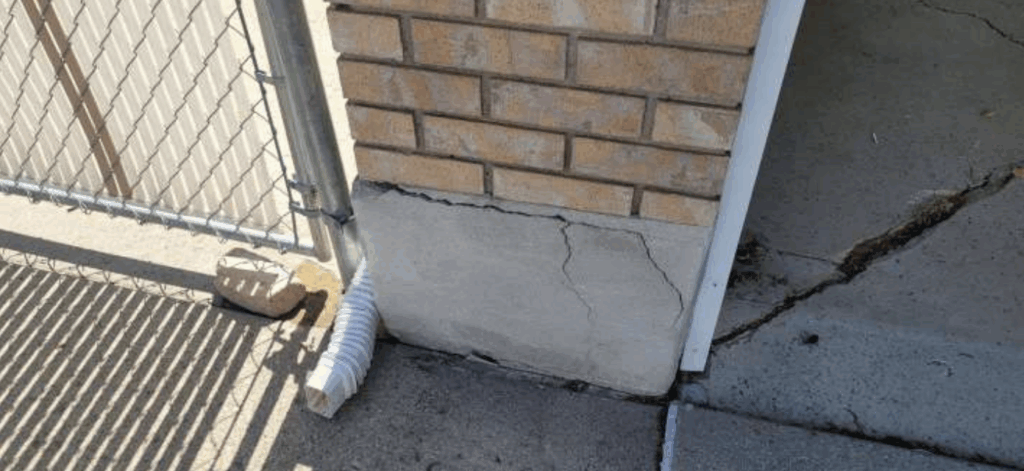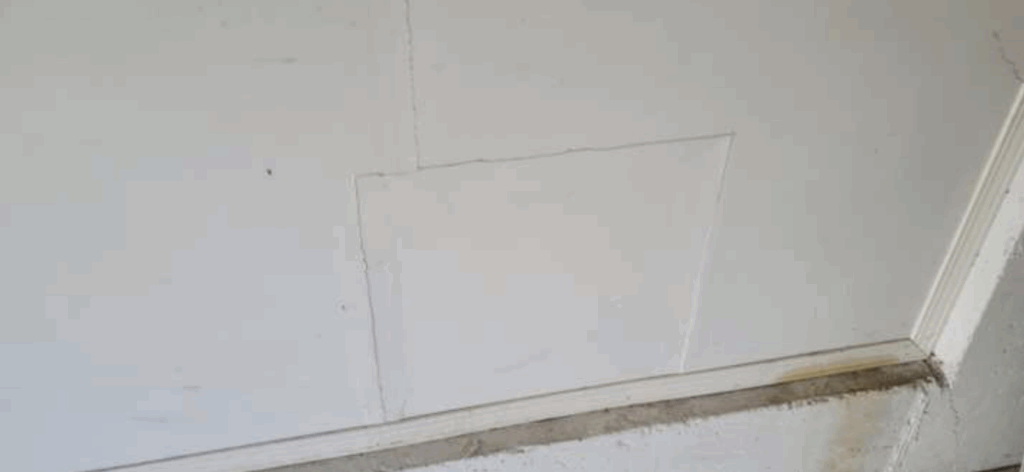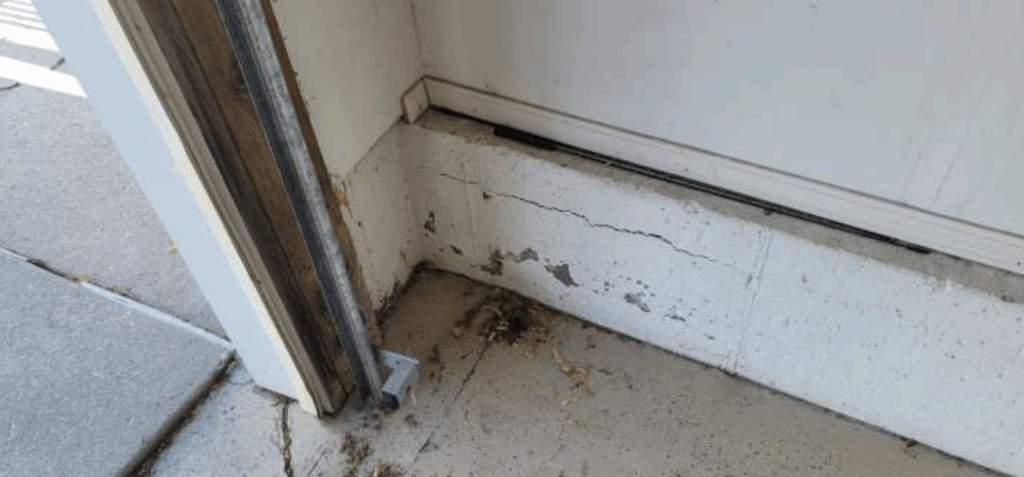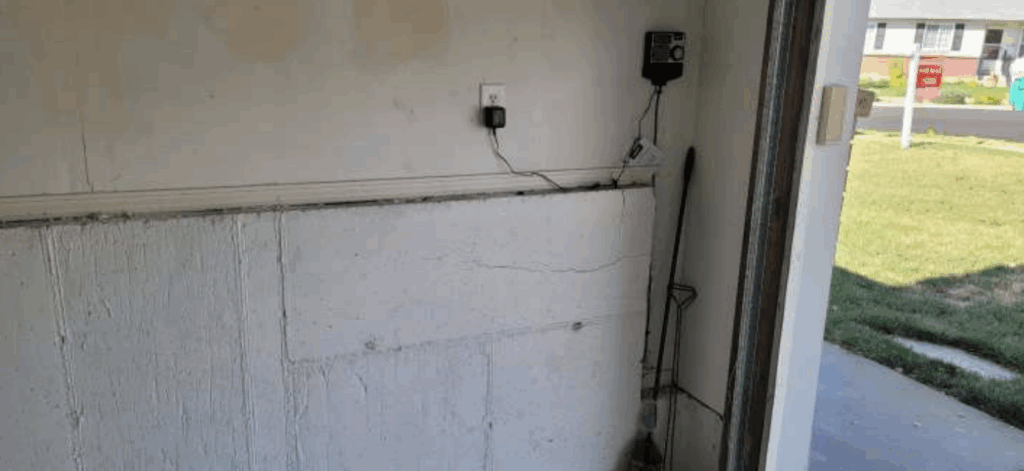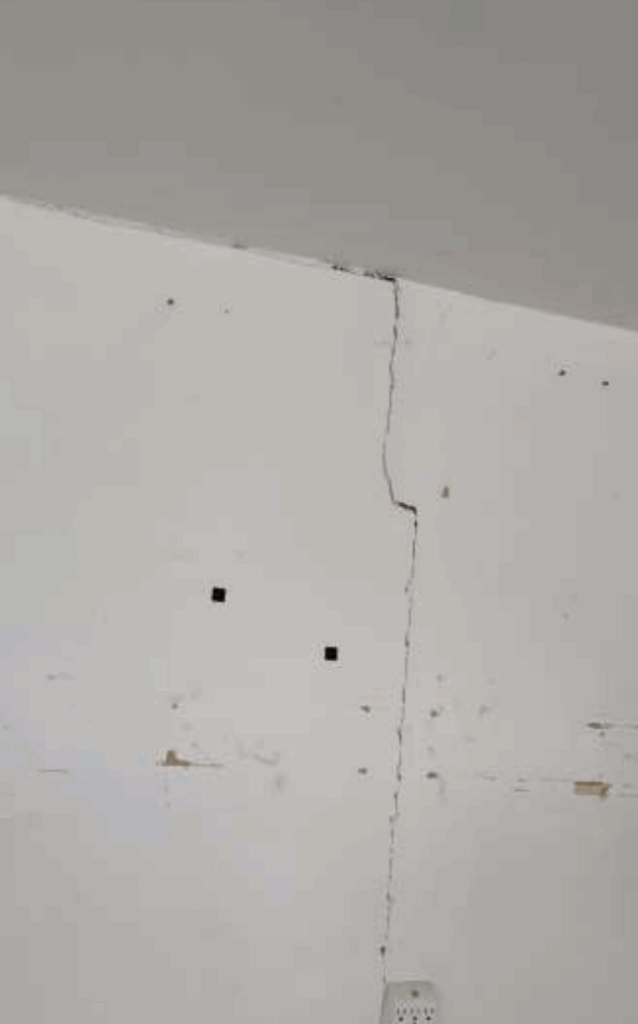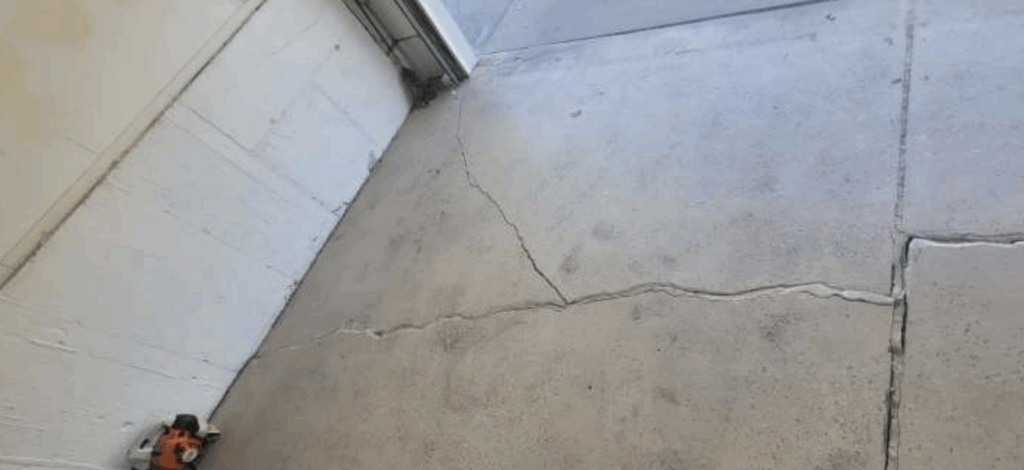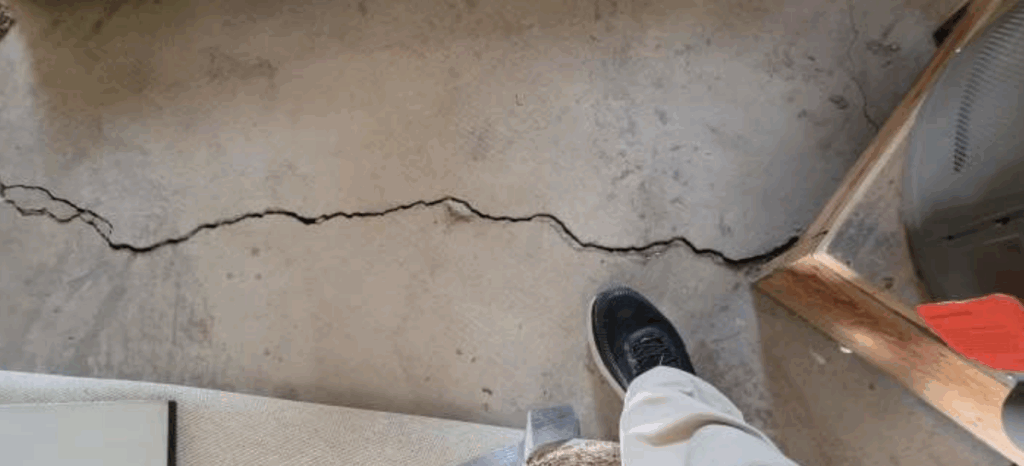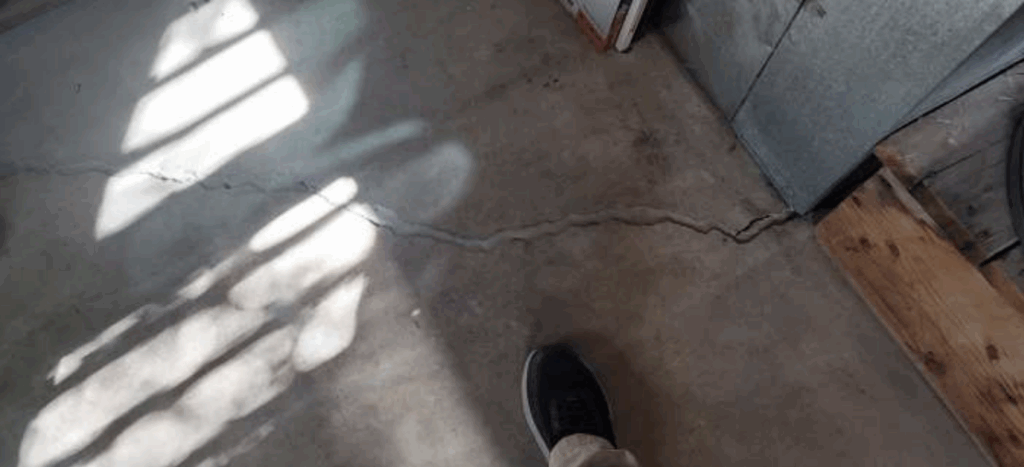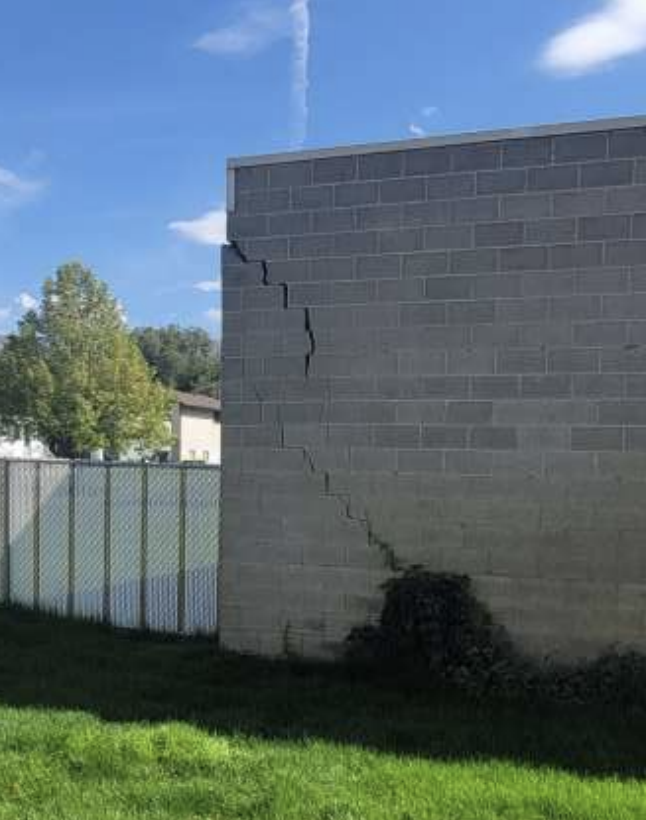
This home in Woods Cross, Utah, is located in an area known for challenging subsurface conditions. The soils here are very soft and contain natural voids in the soil, which often lead to uneven settlement and structural movement over time. We have extensive experience in this region and have observed similar distress in many nearby properties.
At this particular home, two adjacent masonry structures already show significant settlement. They each are seen with vertical cracks more than an inch wide. These cracks are clear signs of soil instability beneath the neighborhood. Within the property itself, the garage is visibly rotating away from the main house. This is due to a result of both poor drainage and the weak, shifting soil below.
Because the home’s siding is a flexible material, it conceals much of the past movement that might otherwise be visible in rigid finishes like brick or stucco. Inside, recent paint and patching further hide evidence of settlement. All this suggests that movement has been ongoing for many years and likely throughout the home’s 40-year lifespan.
Given these conditions, the engineer concludes that the structural risks are too great to ignore. The soil instability, visible damage, and long history of settlement all indicate that the home would require extensive and costly remediation. For this reason, the engineer strongly recommends that the client not proceed with the purchase.