
In Cottonwood Heights, Utah, a home sits along the Wasatch Front with a view that many homeowners dream about. From the back side of the property, the valley stretches out across the Salt Lake area, offering a wide and uninterrupted landscape. Our client wanted to remove several interior walls in order to open the home and create a better visual connection to the valley. Modern homes often rely on interior walls not only for separation between rooms but also for structural support. When walls are removed, the loads they once carried do not disappear. Even with the removed walls, loads from floors, roofs, and snow must still travel safely to the foundation. For this reason, each wall modification needed to be evaluated individually. In total, five separate areas of the home were identified where openings were being considered.
The first location is along the south side bathroom. In this area, the homeowner plans to remove a section of wall measuring up to ten feet in length. The framing in this portion of the home creates a triangular configuration where the load from above bears into the wall at an angle. The beam line near the ceiling reveals how the framing currently transfers that load downward through the wall studs. Because this wall is supporting a live load from above, the load must be redirected once the wall is opened. The replacement structural member for this location will be a beam consisting of two 2×10 members fastened together. Once installed, this beam will collect the load that previously traveled through the wall and transfer it to the supports at each end, allowing the opening to exist without compromising the structural system.
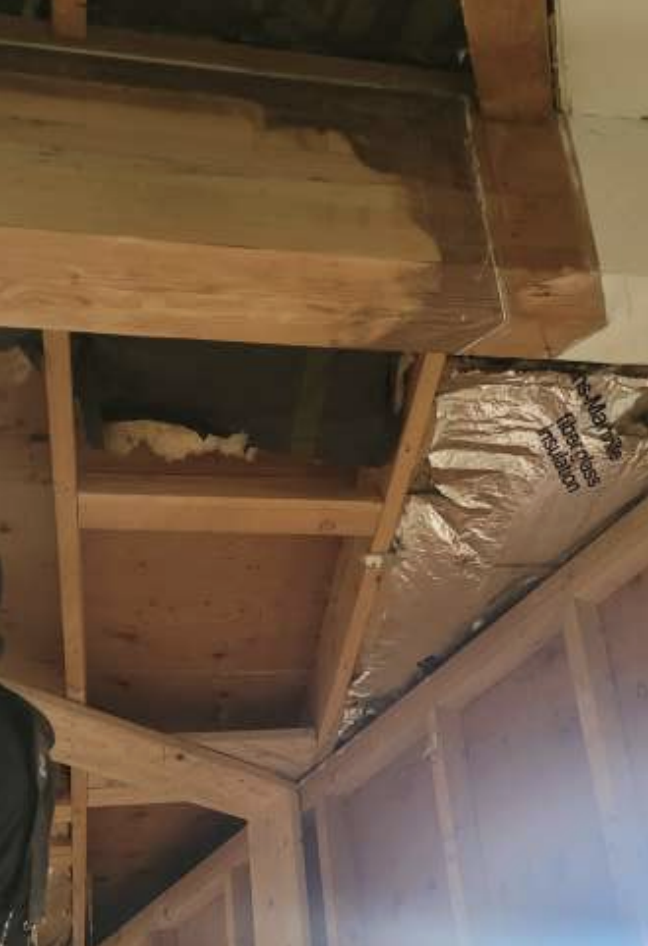
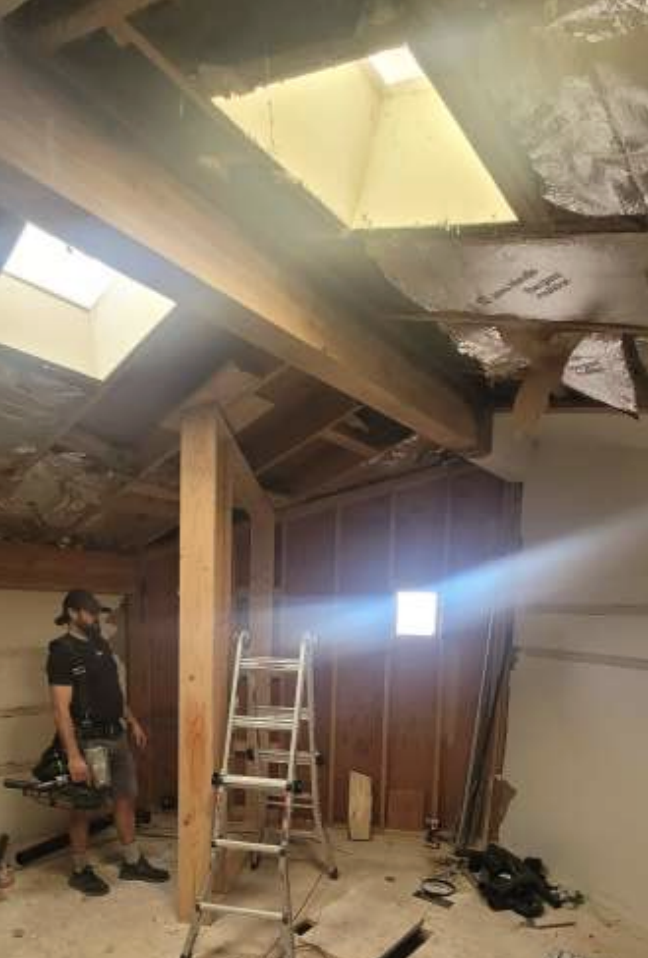
The next area being considered is in the dining room, where the homeowner would also like to remove a section of wall measuring up to ten feet. This wall functions more like a traditional bearing partition, carrying loads from the framing above. To replace the support currently provided by the wall, a header beam will be installed across the opening of this section. The required support for this location will be two 2×12 planks which will create a stronger structural element capable of carrying the load across the span. With this two-plank beam in place, the wall can be opened while the floor and roof loads above continue to bear safely through the new structure.
A third modification is planned in a basement bedroom, where the structural demand increases significantly because it physically holds up the rest of the home. The wall in this location supports both the main floor and the roof above. This means the beam replacing the wall must carry the combined loads of the structure along with the snow loads that accumulate during Utah winters. For this reason, the replacement beam must be stronger than those used in the previous openings. We gave our client two options, option one is two 2×14 members and option two is an engineered 3-1/2 by 10-1/2 inch glulam beam. Either option is capable of supporting the load across the ten foot span while maintaining acceptable levels of deflection.
Moving further into the home, the laundry room presents a different type of challenge. The wall targeted for removal in this area is constructed from concrete rather than wood framing. Opening this section will require careful concrete cutting before any new structural member can be installed.This wall currently supports both the living space above and the snow load from the roof. The opening that needs to be created will be approximately nine feet in width. Because of the loads that are involved from above, the replacement beam must again be either two 2×14 members or a 3-1/2 by 10-1/2 inch glulam beam. Once the beam is installed, the loads that once traveled through the concrete wall will be redirected into the beam and carried down to the supporting structure below.
While the beam sizes differ between these areas, the support system beneath them follows a consistent principle. Each beam must bear on a minimum of two 2×4 studs at each end. These studs must extend downward through the framing until they reach the existing foundation. This continuous vertical support makes sure that the loads from the beams ultimately transfer into the soil beneath the structure. Connections between structural members are equally important. To create a reliable load path, Simpson brackets are required at the beam connections. All holes in these brackets must be filled using minimum #8 screws measuring at least 2.5 inches in length with spaced no more than two feet on center. This will allow the different structural elements to work together as a single system rather than as separate pieces.
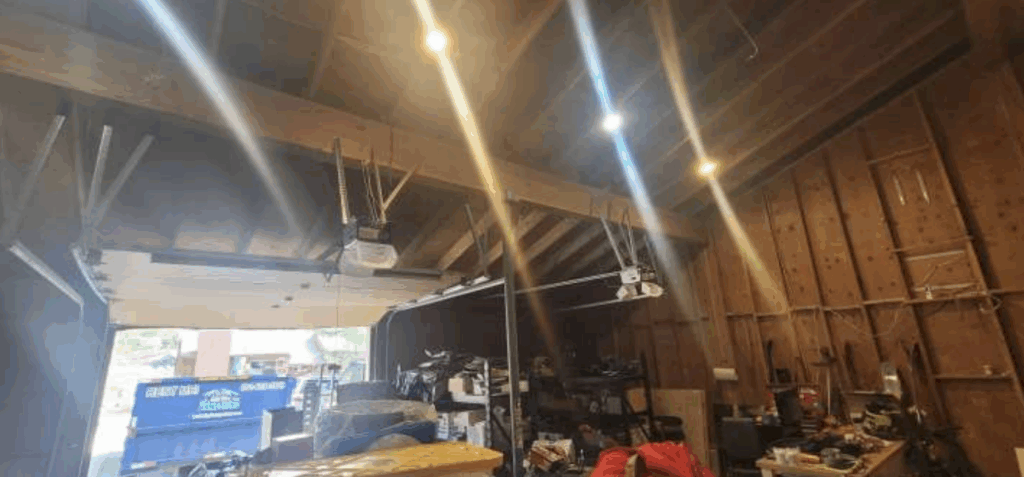
The most significant structural change being considered in the home occurs in the garage. The garage currently contains a large glulam beam that spans roughly 35 feet, with a vertical post located near the 20 foot mark. This post helps support the beam by dividing the span and transferring part of the load to the foundation. The homeowner would like to remove this post in order to create a fully open garage space. Achieving this requires a beam capable of spanning the entire distance without intermediate support (beams in the middle of the garage that would block cars). The analysis determined that a minimum 8-3/4 by 33 inch glulam beam would be required to achieve this clear span. An alternative option would be a W16x61 steel beam, which provides the necessary strength through the properties of structural steel.
A steel beam of this size would weigh approximately 2,100 pounds, making installation a major consideration. Handling and placing a beam of that weight typically requires mechanical lifting equipment and careful coordination during construction. Because of the large loads carried by this beam, the support beneath it must also be reinforced. The beam ends must bear on a minimum of four 2×6 studs, fastened together using 5.5 inch #8 screws spaced two feet on center. These studs must extend down to the existing foundation so that the loads can ultimately bear on the soil below.
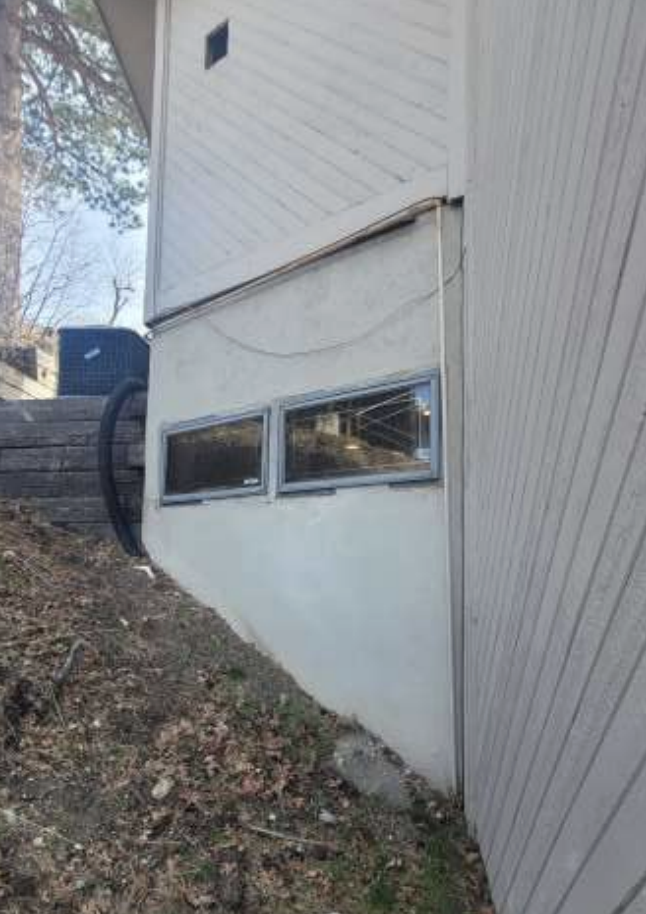
Another structural consideration involves shear walls. Some of the walls being opened currently help resist lateral forces from wind or seismic activity. When sections of these walls are removed, the structure loses some of its lateral resistance. To compensate for this, additional shear capacity must be introduced nearby. This will be achieved by installing double the removed shear wall area using minimum 1/2 inch OSB sheathing in locations close to the new openings. By replacing this capacity, the home maintains its ability to resist lateral movement.
Standing inside this home in Cottonwood Heights, it becomes clear that the project is about more than simply removing walls. Each wall quietly carries part of the structural responsibility of the home. When that wall is removed, the load must be redirected in a controlled and predictable way. With properly sized beams, reinforced supports, and carefully installed connections, the structure will continue to perform exactly as intended. The difference is that the interior spaces will now open toward the valley beyond, allowing the view that originally inspired the project to become part of the home itself.