
On November 17, 2025, we arrived at a property to perform a structural inspection focused not on dramatic failures or visible collapse, but on something quieter and just as important. Our attention was drawn to understanding which walls in the home truly carry load, and which ones simply divide space. According to Zillow, this residence is a four bedroom, three bathroom single family home with approximately 2,300 square feet of living space that was built in 1955.
Our client wanted to open up the interior of the home by combining the kitchen and living room into a single larger space. Before any demolition could begin,we were asked to determine which interior walls were structural and which could be removed without compromising the building’s ability to safely bear load from above.
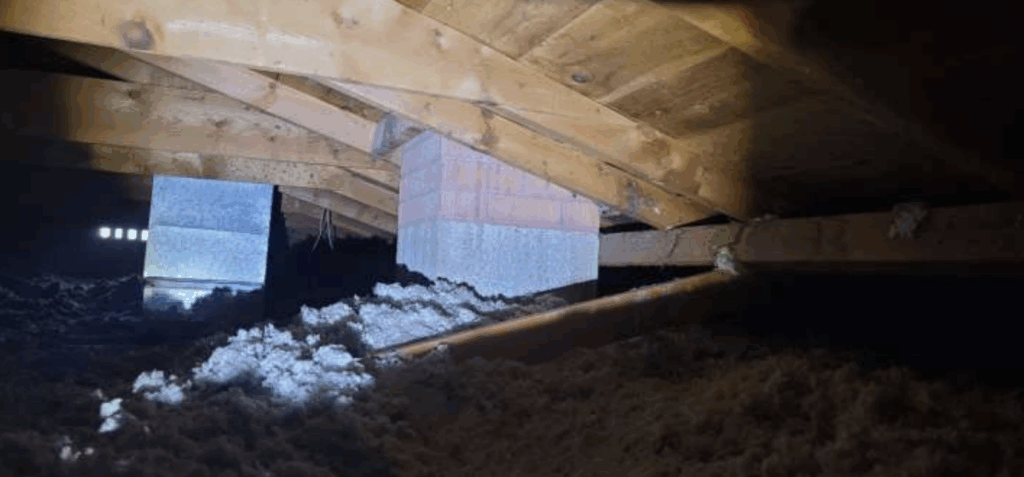
As with most inspections of older homes, the process began inside. Framing members were reviewed, wall orientations were noted, and the direction of attic rafters above were carefully considered. Looking at the rafters is in most cases the key to finding which walls actually carry any load. Removing a wall that is important to the structure may introduce sagging, cracking, or long term settlement issues that may not appear immediately, but can develop over time. In radical cases, removing an important wall could have immediate and devastating effects.
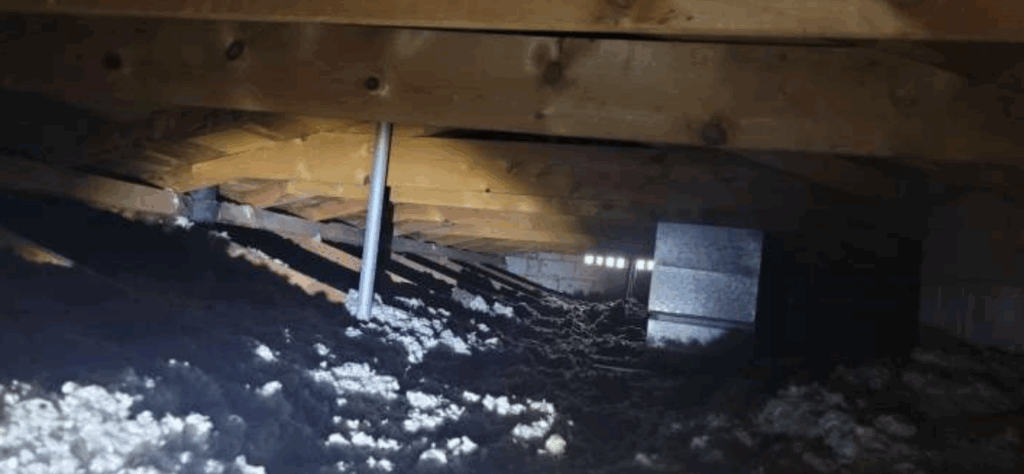
The inspection revealed that all interior walls running north to south may be removed without interfering with load transfer. These walls are non structural and do not play a role in supporting the roof or attic framing. For the homeowner, this is significant. It means that a large portion of the interior layout can be altered freely, allowing for reconfiguration of rooms, hallways, or storage areas without the need for additional structural reinforcement.
In addition, the back side of the hallway wall, identified as the paneled side, may also be removed without structural concern. This portion of the wall is not contributing to load transfer and functions only as a divider. Removing it opens additional design flexibility and allows light and space to move more freely through the interior.
The central wall, however, tells a different story. Unlike the other interior walls, this one does provide structural support for the attic rafters above. It is actively bearing load and transferring that load down to the foundation system below. Any removal or modification of this wall must be approached carefully. If the client chooses to alter this wall, the load it currently carries cannot simply disappear. It must be redirected through a properly sized beam and supported at each end by adequate posts that bear directly on the foundation and footing.
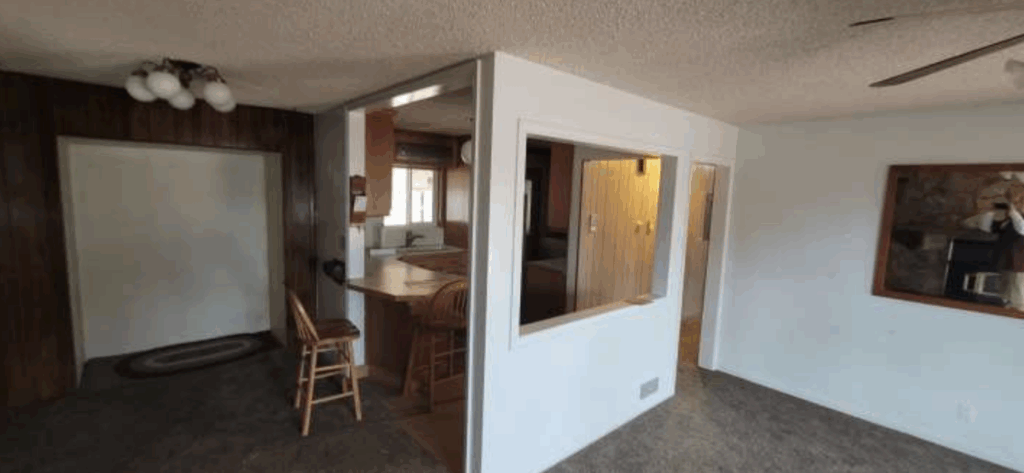
The client intends to remove a section of this central wall in order to combine the kitchen and living room areas. From a structural standpoint, this is a reasonable request, provided the correct reinforcements are installed. The proposed modification will require an engineered beam approximately 18 feet in length. The beam must be capable of supporting the roof and attic loads previously carried by the wall.
We specified several acceptable options for what the homeowner has in mind. The beam shall be a minimum 5-1/4 by 14 LVL or a 5-1/2 by 16 Glulam. These engineered wood products are designed to provide consistent strength and predictable performance over long spans. If the client prefers steel, a W8x24 beam will meet structural requirements and provide adequate capacity for the span and loading conditions.
Equally important as the beam itself are the supports at each end. On the north side, the beam may rest on the existing exterior wall. This support must consist of a minimum of two 2×4 members acting as a column and extending down to the foundation and footing below. The south side will also require a minimum of two 2×4 members configured in the same manner. These posts ensure that the load collected by the beam is safely transferred to the ground without overstressing the framing.
Connections matter as much as materials. The beam, the posts, and the concrete must be connected using standard Simpson brackets or equivalent hardware. All holes are to be filled using minimum 3 inch number 8 screws or better. These connections help ensure that loads are transferred as intended and that the assembly behaves as a single, integrated structural system rather than a collection of loosely connected parts.
While the primary focus of the inspection was the interior walls, we also reviewed the exterior conditions of the home. During this review, it was observed that drainage around the structure needs improvement. Surface water must be graded away from the home, and roof runoff should be collected and discharged at least 10 feet from the foundation. Poor drainage allows water to accumulate near the base of the structure, softening soil and increasing the risk of settlement, cracking, or moisture intrusion over time.
Another exterior concern was the awning at the back of the house. The awning appears structurally unsound and should be repaired or replaced. It is low in height, and it appears the span was constructed using 2×8 members or smaller. Given the span length and the additional snow load contributed from the roof above, this area is subject to failure. Under heavy snow conditions, the awning framing may not be capable of safely bearing the imposed load.
We recommended that the awning be removed and rebuilt if the client wishes to retain it. A rebuilt structure should be properly sized for the span and expected snow loads, ensuring it can safely bear weight without excessive deflection or risk of collapse.
This inspection highlights a common theme in residential remodeling. Opening up a space is often possible, but never without understanding how the home was originally designed to carry load. Walls that appear similar can serve very different purposes. With proper engineering, thoughtful reinforcement, and attention to drainage and exterior details, this 1955 home can be modernized while still respecting the structural systems that have supported it for decades.