On January 7, 2025, a home in Salt Lake City, Utah was inspected. According to Zillow, it is a three bedroom, one bathroom single family home built in 1976, with roughly 1,526 square feet of living space. Like many homes of its era, it carries the marks of time in small and discreet ways. Nothing dramatic. Nothing failing. Just a structure that has stood long enough to earn an honest look from a structural engineer.
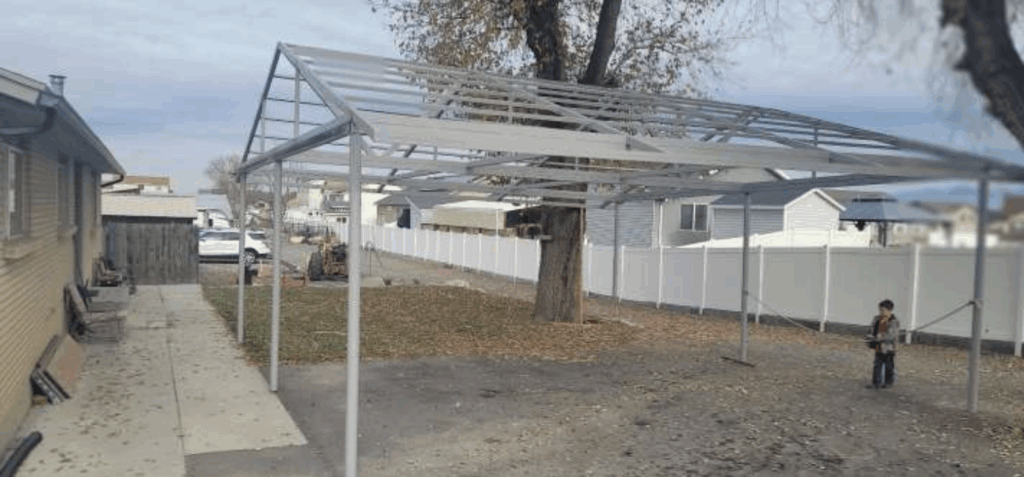
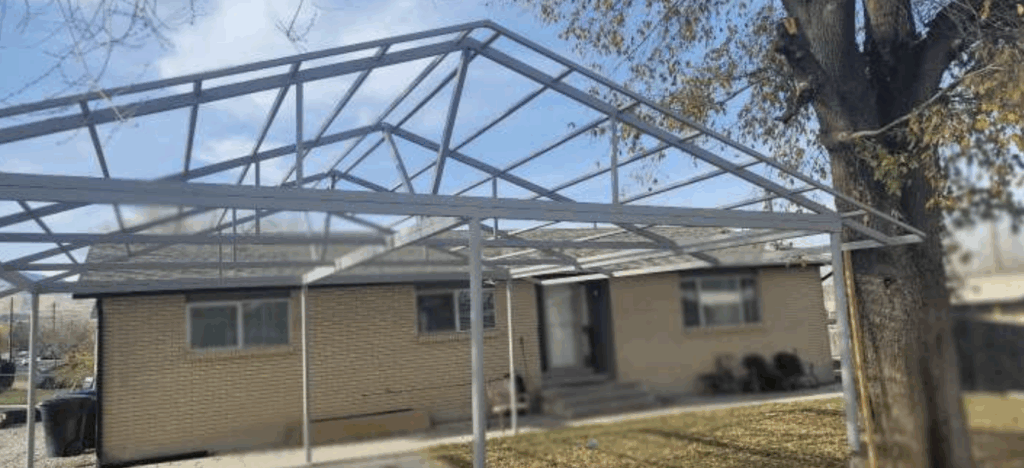
We arrived to perform a structural inspection focused not on the house alone, but on something newly introduced to the site; a steel carport. It wasn’t a prefabricated kit or a lightweight shelter bolted together on a weekend. This was a fully welded steel structure, designed and built by the homeowner himself.
The client is a retired steel worker, experienced and knowledgeable, with decades of hands-on construction behind him. The steel carport was originally placed between the home and the road, a practical decision at the time. Since then, it has been relocated to the west side of the house, where it now sits in its proposed permanent location. Relocation often raises concerns in structural work. Loads change, soil conditions change, foundations must be reconsidered, and nothing can be assumed to behave the same way twice.
The proposed carport measures 24 feet by 24 feet in plan, with a maximum height of 9 feet to the bottom of the rafters. We noted that the overall height could be reduced if desired, and that any height lower than 9 feet would not change the structural integrity. The structure is open on all sides, which immediately changes how it interacts with wind. Unlike enclosed buildings that must resist wall pressures, this carport primarily experiences wind load at the roof plane. Wind shear calculations were still provided, but no unusual exposure conditions were expected.
This is where the story becomes less about appearances and more about what carries weight. Literally.
The carport will bear on six spot footings, each extending down to frost depth (30 inches below ground level). In Utah’s climate, frost depth is not a suggestion, it is a requirement that protects the foundation from seasonal soil movement. Each footing is specified at a minimum of 16 inches in diameter and must protrude at least 3 inches above the soil line. This small detail matters. It keeps steel from sitting directly in soil and moisture, extending the life of the structure by years.
Reinforcement is provided by a cage of #4 rebar spaced at a maximum of 12 inches on center, with a minimum of 2 inches of concrete cover from the perimeter. The steel structure itself is anchored to the foundation using 3/8 inch minimum J-bolts. This structure won’t be excessive, but it won’t be underbuilt. It will simply act as a clean load path from roof to soil.
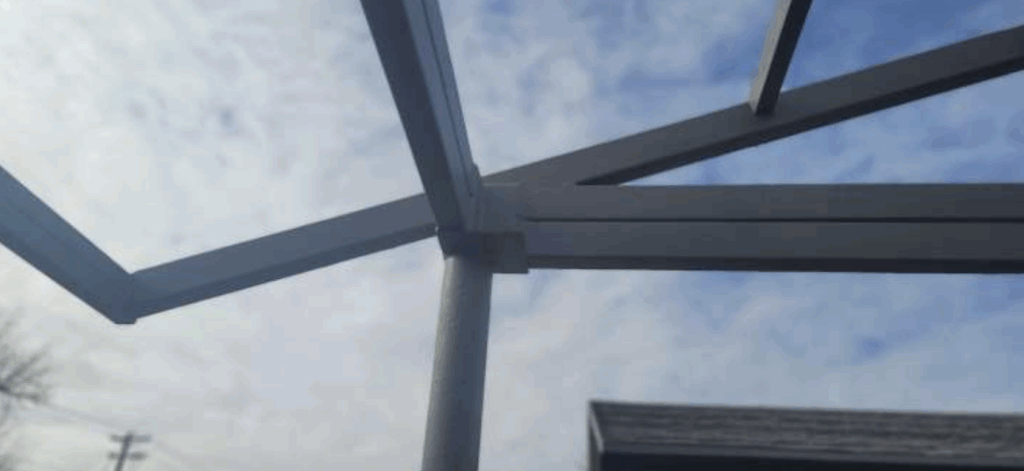
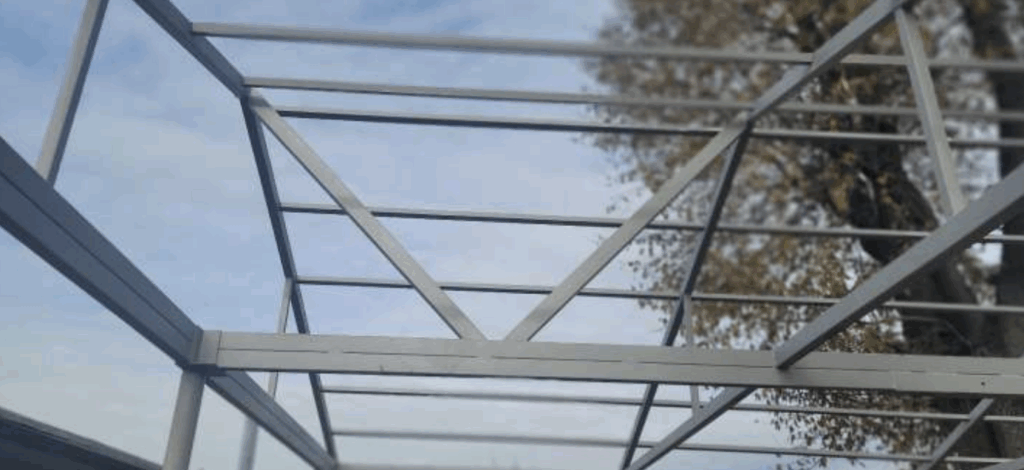
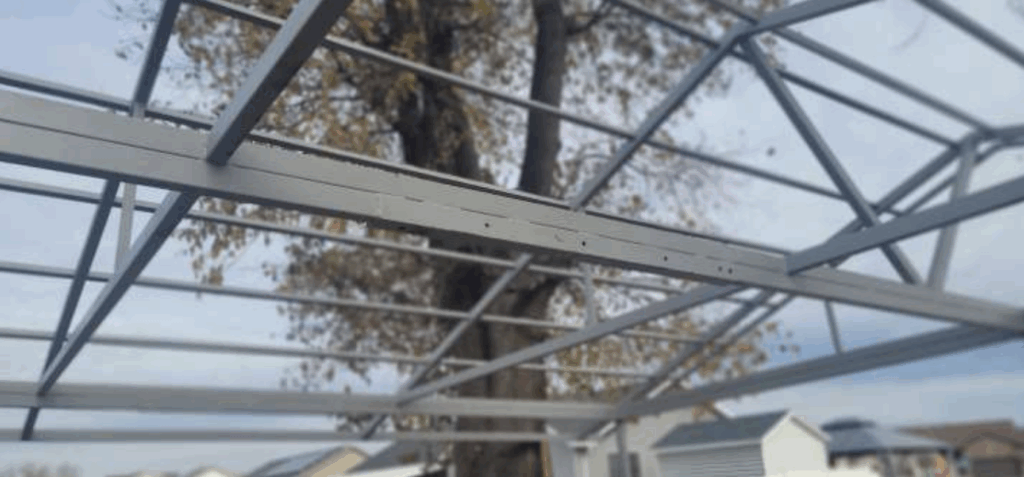
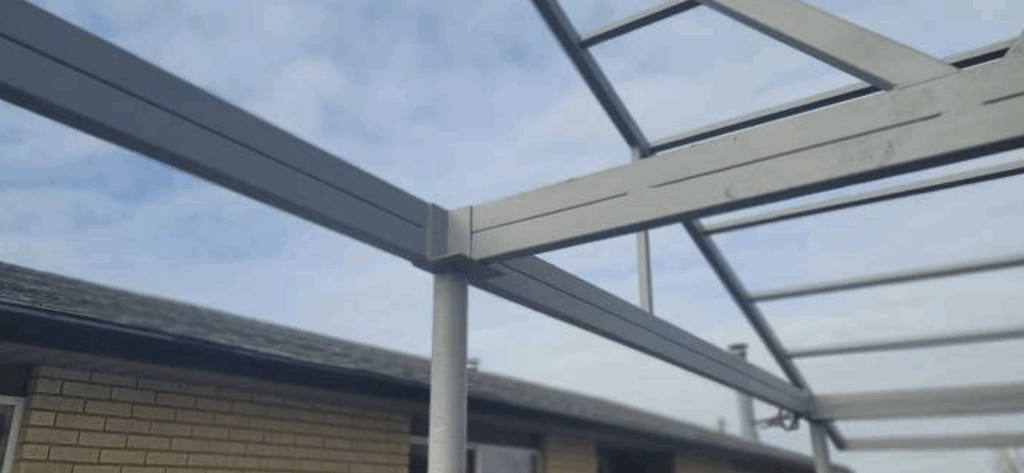
Above the foundation, the steel framing tells its own story. The joists are HSS steel, 3 by 2 inches with an eighth inch wall thickness. At the interface between the parking space and the rafters, these joists are doubled, recognizing the increased demand at that transition point. There are six posts in total, with the two center posts supporting a center beam, also steel. This central line of support reduces span lengths and keeps deflection balanced.
The purlins are spaced at 2.5 feet on center and are fabricated from 1.5 inch by 1.5 inch, 16 gauge steel. A two foot overhang extends beyond the roof faces, typical for most Utah structures, providing both weather protection and a familiar visual proportion. The roof pitch is 4 on 12, enough to shed snow without becoming overly tall or imposing.
Each roof face measures approximately 14 feet 8 inches, and the total weight of the steel structure comes in at around 2,980 pounds. That load is not a problem when it is understood, distributed, and supported correctly. In this case, it is. The loads flow from purlins to rafters, from rafters to beams, from beams to posts, and finally into the footing below. This is how typical structures are meant to behave.
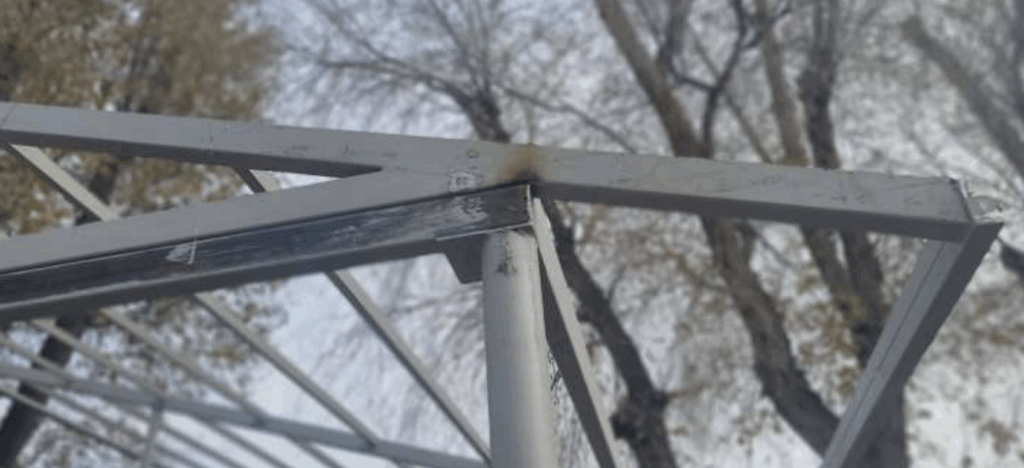
During the inspection, we reviewed the welds, connections, member sizes, and overall configuration. What stood out was the detailed craftsmanship of the structure. The structure was found to be impressively built, a reflection of the client’s experience in steel construction. It meets structural requirements and is approved as a structural element when finished as described.
There is something reassuring about seeing engineering done right in a residential setting. No shortcuts hidden behind finishes and no makeshift solutions relying on luck instead of load calculations. Just steel, concrete, and soil working together as intended.
In Salt Lake City, where snow loads, frost, and wind are part of everyday design considerations, this carport stands as a reminder that even simple structures deserve thoughtful engineering. It is not just a place to park a vehicle. It is a small, well-resolved system of forces, grounded in a solid foundation, and built to last.