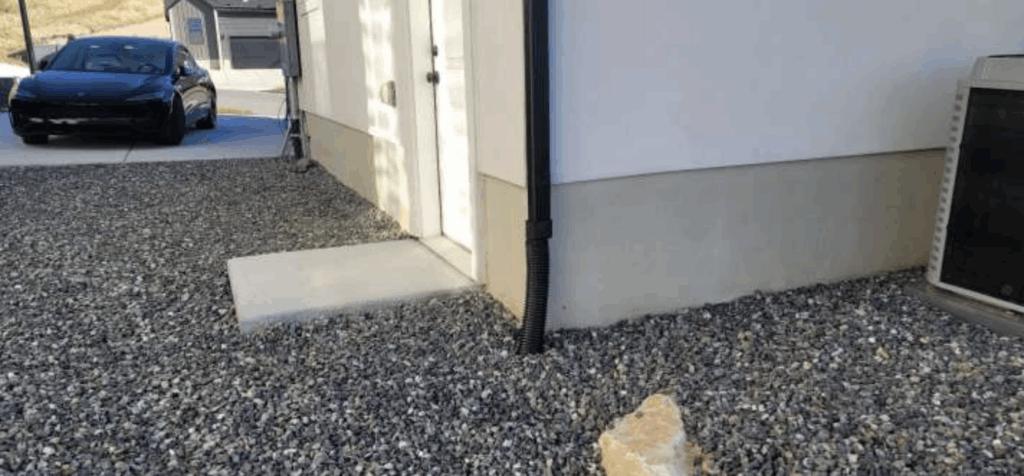
This two-story stucco residence sits along the western edge of the Lehi Utah foothills—an area known for sandy soils and a history of ground movement. Although the home is set back more than 100 feet from the steeper slopes, it still rests on a visibly sloped site, where settlement and lateral soil movement remain possible concerns.
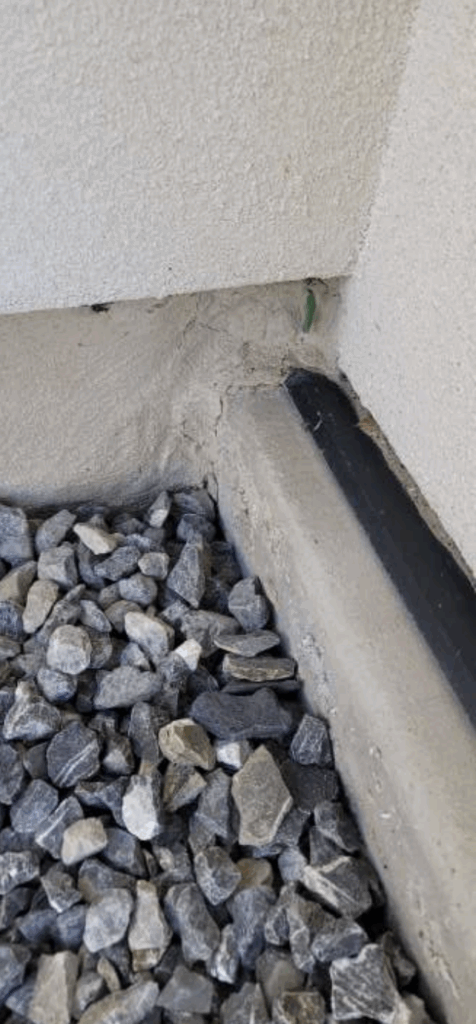
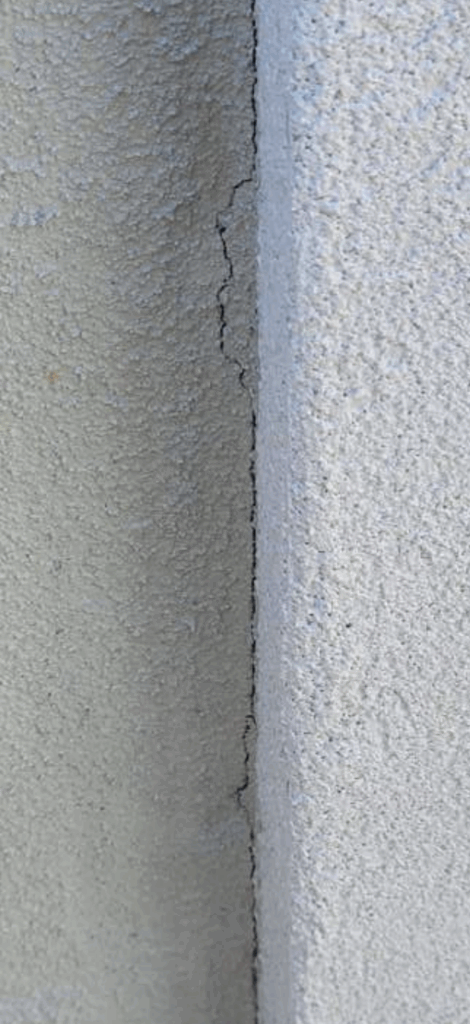
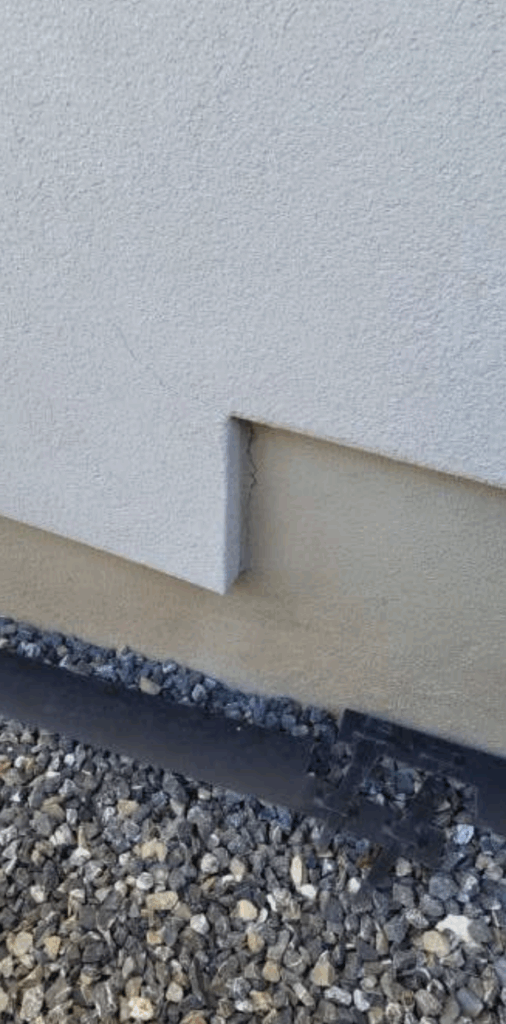
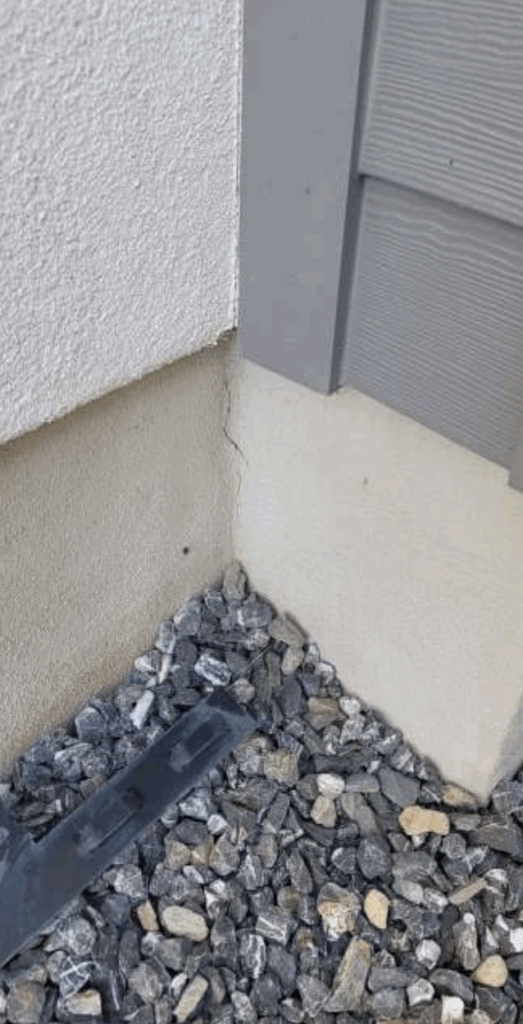
Our inspection focused on potential site-related structural issues. Interior access was not permitted, limiting the assessment to exterior observations. Around the perimeter, we noted numerous small cracks in the stucco and visible areas of patching. While minor cracking is typical of normal settlement, it is uncommon to see such patterns in a home less than a year old. The patching suggests earlier attempts to conceal or address these conditions, though their cause cannot be confirmed without further investigation.
Given the home’s location, soil profile, observed cracking, and the restricted scope of the inspection, we are unable to certify long-term structural stability. As a precautionary measure, installation of structural helical piers is recommended—ideally spaced about six feet apart or as specified by a qualified pier contractor. Proper site drainage should also be maintained to prevent soil saturation and reduce settlement risk.
In conclusion, the combination of sloped terrain, early cracking, and limited inspection access introduces uncertainty regarding the foundation’s performance. Installing structural piers offers the most reliable path toward long-term stability and peace of mind for the homeowner.